★ Beat print – get early access to the news by signing up to the Sporting Gun newsletter here ★

How pattern testing your shotgun can transform your shooting
Pattern testing your shotgun is the key to better shooting. Learn how choke choice, cartridges and point of impact affect performance, accuracy and confidence in the field.
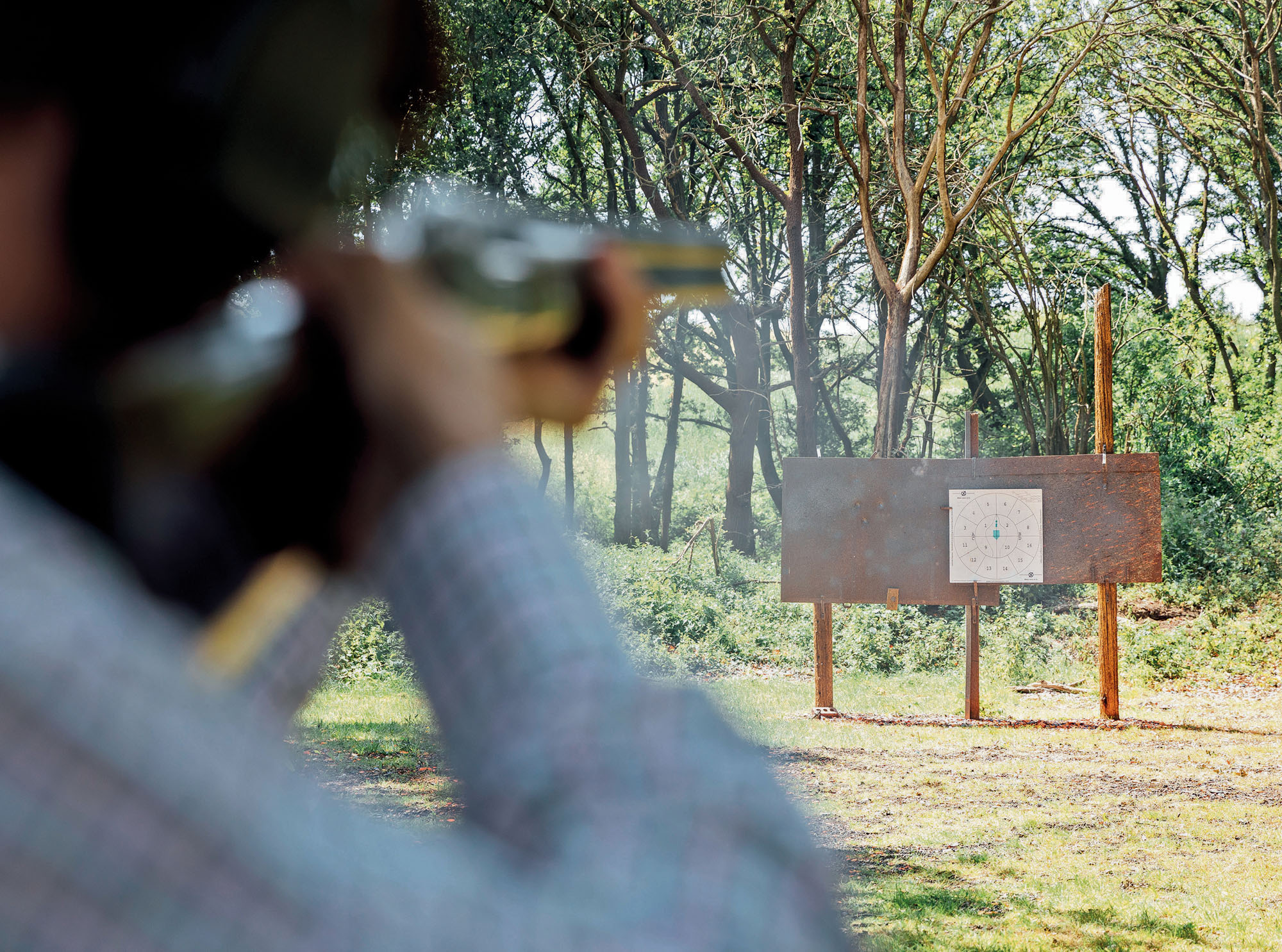

Pattern testing a shotgun is one of the simplest and most effective ways to improve shooting performance, yet it’s something many shooters never do. Most of us buy a gun, screw in the supplied chokes and choose cartridges based on price, availability or a recommendation. As long as birds or clays are falling, it’s easy to assume everything is working as it should.
But that assumption can be costly. If your shotgun isn’t patterning correctly, you could be fighting your equipment without realising it. Patterns may be off-centre, too tight, too open or uneven, with gaps large enough for clays or quarry to slip through. The only way to know for sure is by pattern testing your shotgun.
Despite sounding technical, shotgun pattern testing is straightforward, quick and incredibly revealing. In as little as an hour, you can gain valuable insight into how your gun, chokes and cartridges actually perform together – information that can transform both results and confidence in the field.
Why Pattern Testing a Shotgun Matters
No two shotguns pattern exactly the same. Even quality chokes can produce unexpected results, and more importantly, your gun may not be shooting where you think it is.
Point of impact is the biggest issue uncovered through pattern testing. A shotgun that consistently shoots high, low, left or right will cause regular misses, often blamed on technique. In reality, the gun is placing the centre of the pattern somewhere other than where you are looking.
Pattern quality is equally important. Two shotguns can achieve the same overall pattern percentage yet behave very differently. One may deliver an even spread of pellets, while another produces a dense centre with patchy edges. Those gaps are where clays and birds escape.
Cartridge choice also plays a major role. Different loads behave differently through the same choke, and cartridges from different manufacturers can produce dramatically different patterns, even when the specifications appear identical.
What You’re Testing When Pattern Testing a Shotgun
The first thing to assess is point of impact, which shows where the centre of the shot pattern lands relative to your aiming point. Ideally, the pattern centre should sit exactly where you are looking, although some shooters prefer a slightly high point of impact depending on style and discipline.
Next is pattern percentage, which measures how many pellets land within a 30-inch circle at a given distance. Each choke is designed to deliver a certain percentage, and pattern testing confirms whether it does.
Pattern quality is just as important as percentage. You want consistent pellet distribution with no large gaps. Finally, pattern testing helps determine effective range – the distance at which patterns become too thin for clean kills or reliable breaks, and which choke and shot size combinations work best for the distances you typically shoot.
Pattern Testing at a Shooting Ground
Many shooting grounds offer shotgun pattern testing services, which is often the easiest option, especially for first-timers. Grounds have proper pattern plates, experienced staff and the ability to interpret results accurately.
Typically, several shots are fired using your chosen chokes and cartridges. The patterns are analysed for point of impact, pattern percentage and consistency. Some grounds provide written reports or photographs, allowing you to keep a permanent record of your shotgun’s performance.

How to Pattern Test a Shotgun Yourself
DIY shotgun pattern testing is simple and effective. You’ll need strong paper or a dedicated pattern board, available from specialists such as Teague.
Set up a solid backing board – an old door against a bank or straw bales works well, or a shooting ground will likely have a steel plate already set up. Measure out 30 yards, which is the standard distance for game shooting. Mark a clear aiming point around an inch in diameter and ensure you are shooting square on, not at an angle.
Bring a tape measure, a pen and a box of each cartridge you want to test. Fire at least three shots with each choke and cartridge combination, though five shots will give more reliable results.
At What Range Should You Pattern Test a Shotgun?
For most shooters, pattern testing a shotgun should be done at 30 yards. This distance is the recognised standard for assessing shotgun patterns, particularly for game shooting, and it provides a realistic picture of how your gun, choke and cartridge combination performs in the field.
Pattern testing at 30 yards allows you to accurately measure point of impact, pattern percentage and pellet distribution within a 30-inch circle. It also reflects the distance at which many game birds are first engaged and where clean, consistent kills matter most.
Clay shooters may also choose to pattern test at 40 or 50 yards, especially when assessing tighter chokes and longer-range targets, as this can help determine effective range and pattern integrity further out. However, 30 yards remains the most useful baseline, particularly when comparing different cartridges or choke combinations.
If you regularly shoot at significantly shorter or longer distances, it can be helpful to repeat the process at those ranges too. The key is consistency: always record the distance used, as even small changes can dramatically affect pattern density and results.
How to Read Shotgun Pattern Testing Results
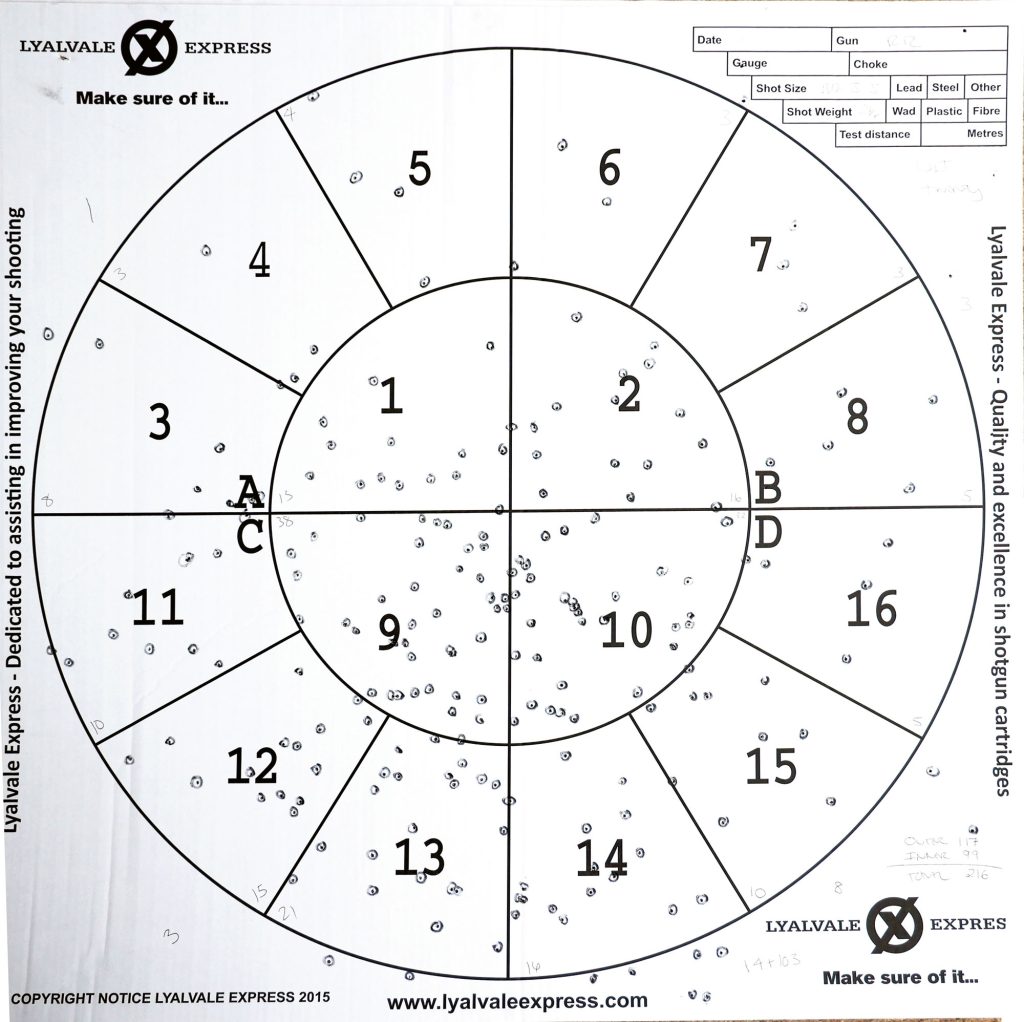
First, identify the pattern centre by finding the densest concentration of pellet strikes. Draw a 30-inch circle around this centre and count every pellet within it.
To calculate pattern percentage, you’ll need to know the pellet count of your cartridge. For example, a 32g No 6 load contains roughly 280 pellets. If 170 strikes land within the circle, that equates to around 61%, which is typical of half choke.
Check point of impact by measuring the distance between the aiming mark and the pattern centre. If multiple shots show the same offset, your shotgun is consistently shooting off-line.
What Shotgun Pattern Testing Tells You
If your shotgun consistently shoots left, right, high or low, that needs addressing. While you can compensate temporarily, the proper solution may involve gun fit adjustments or lessons to improve mounting technique.
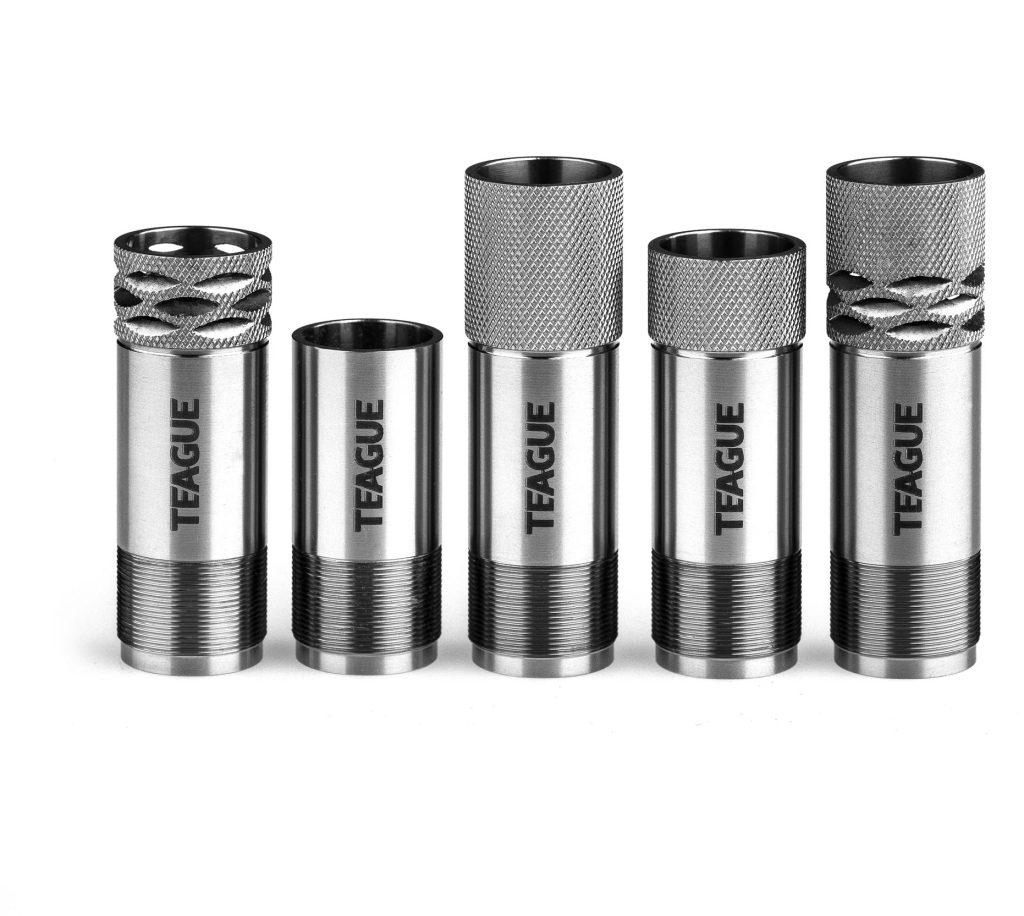
If your chokes aren’t performing as expected, alternative options may help. Aftermarket chokes, such as those from Teague, offer different constrictions and designs. Patchy patterns often respond well to a change in cartridge, as some guns simply do not like certain loads. Fibre and plastic wad cartridges can pattern very differently.
If patterns are too tight for the shooting you do, consider opening the chokes. If they’re too open and birds are being wounded or targets slipping through gaps, tightening the choke may be the answer.
Repeat pattern testing whenever you change cartridges, buy new chokes or have work done to the gun. Many shooters pattern test annually before the season begins.
The Confidence That Comes from Pattern Testing
Once you’ve pattern tested your shotgun, you know exactly what it’s doing. That knowledge builds confidence. When you miss, you understand why – and you know it isn’t down to hidden equipment issues.
Pattern testing a shotgun doesn’t require expensive equipment or specialist knowledge. Just a safe place to shoot, some paper and a little time. The payoff is better shooting, fewer missed opportunities and greater confidence every time you step onto a peg or clay stand.
Key information
Teague Precision Chokes
Prices vary
Thimbleby Shooting Ground
01609 883401
Related Articles
Beretta 688 review
A full review of the Beretta 688. Designed for serious clay shooters seeking competition performance, modern design and strong value.
By Lloyd Pattison

Why your shotgun cartridges are failing to eject
Cartridge ejection failures are highly frustrating, but this common problem might not be caused by your shotgun’s ejectors, but modern cost-saving cartridges themselves, explains gunsmith and shoote...
By Sporting Gun
Get the latest news delivered direct to your door
Subscribe to Sporting Gun
Sporting Gun has been the trusted voice of the shooting community since 1978, and a subscription is the best way to make sure you never miss a word of it.
For just £3.75 an issue – 46% less than the newsstand price – you’ll receive Britain’s leading shooting magazine delivered to your door before it hits the shelves. Every issue is packed with expert gundog training advice, in-depth shotgun and cartridge reviews, technique features from professional shots, pigeon and wildfowling coverage and the people and stories that define the sport.
In a world of endless scrolling, a magazine is something different – a moment to slow down, read properly and absorb knowledge that makes you a better shot. Back issues become a reference library worth keeping.