★ Win a HÄRKILA Kenmore shooting waistcoat worth £299.99! Click here to enter ★


Wildfowling guide: shooting ducks and geese on the foreshore
A complete guide to UK wildfowling: access, equipment, safety and coastal shooting techniques

What is wildfowling?
Drawing on more than five decades of experience, Alan Jarrett explains why wildfowling remains one of the most accessible and rewarding branches of shooting, and how newcomers can take their first steps with confidence
Growing up only a little way from the shore and marshes of Kent, with guns always in the home and my father and uncle regularly roaming the Downs in search of anything for the pot, one would naturally assume that I would have had an inherited interest in wildfowling. But that wasn’t the case.
It was only when copies of Shooting Times found their way into the household that my interest was actually piqued, being completely captivated by the tales from the shore and its hinterland. There were some older friends who ran a nearby shoot, and it was them that took me to the shore for the first time. I was sold on the sport – taking to it like the proverbial duck to water – and was driven to write prolifically on the subject which I still do to this day.
My first wildfowling article was published in 1975 and that started my journey of telling the sort of tales which inspired me to first try my hand at the sport. Now almost 1,500 articles and 15 books later I hope to have kept faith with those writers from way back who so inspired me to don thigh boots and head to the shore.
There are diverging opinions about what constitutes wildfowling. The purist would say the sport is only true if you are below the seawall, where the tide flows and ebbs. All a matter of opinion of course, but wildfowl can be found anywhere there happens to be water or a soggy corner, and there are some great places to shoot wildfowl many miles from the coast. For me it is not a case of the snobbery of what is purist wildfowling, rather a matter of enjoying the sport wherever and whenever it can be found.
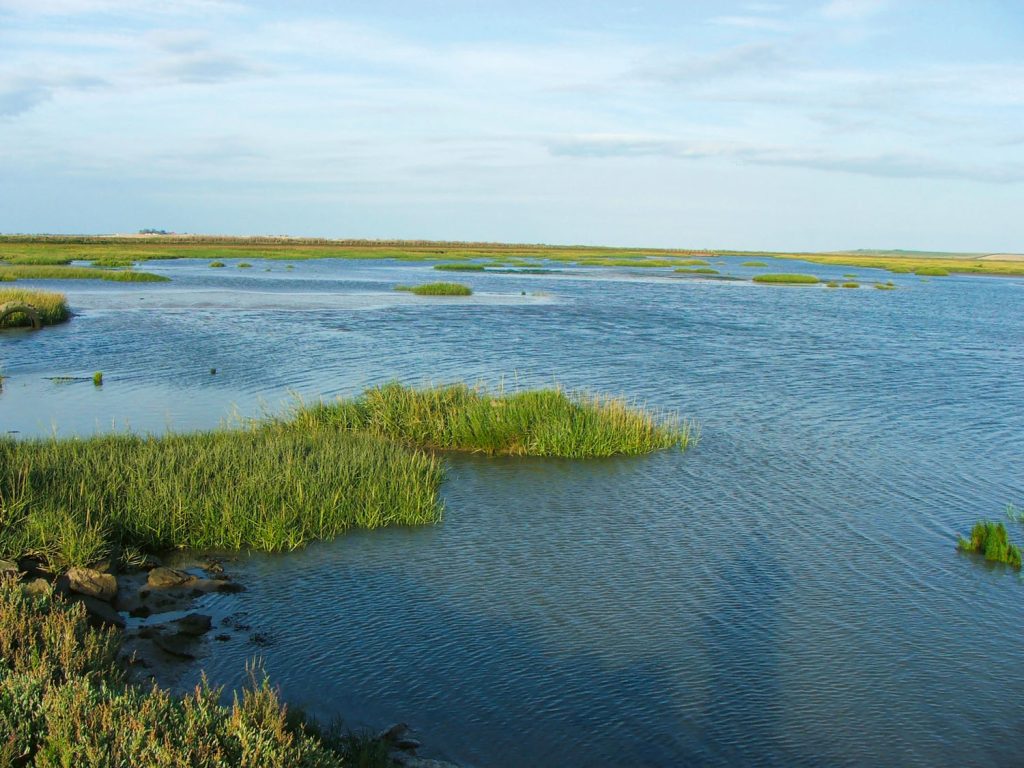
All what I call my ‘hard-core’ wildfowling is carried out below the seawall, and the magical experiences that it brings are for me incomparable. But I would never criticise those who pursue their wildfowl in marsh and fen, or beside some of the big inland waters such as the Ouse Washes when in full flood.
It is perhaps a paradox that so many wildfowlers decades ago were pivotal in the conservation of wildfowl and wetlands. They created the guiding principles which led to the formation of the Wildfowlers Association of Great Britain and Ireland (WAGBI) in 1908. The club structures which now control virtually all our coastal wildfowling really got underway following the passing of the Protection of Birds Act 1954, and later the Firearms Act 1968, both of which produced a sea-change in the way our sport could be carried out.
Legal requirements and foreshore access
For many years ‘free’ wildfowling was available on Crown Foreshore under a rather nebulous General Licence, although this was a way of avoiding prosecution for trespass (post-1968 armed trespass) rather than permission per se. Following the demise of the General Licence many of those areas were rolled up under club control, and largely remain so to this day.
Today, anyone wanting to carry out any serious wildfowling needs to belong to one of the many clubs scattered around our coast, and some inland marshes. The exception to this is in Scotland, where there is still plenty of ‘free’ shooing providing legal access to the foreshore can be attained.
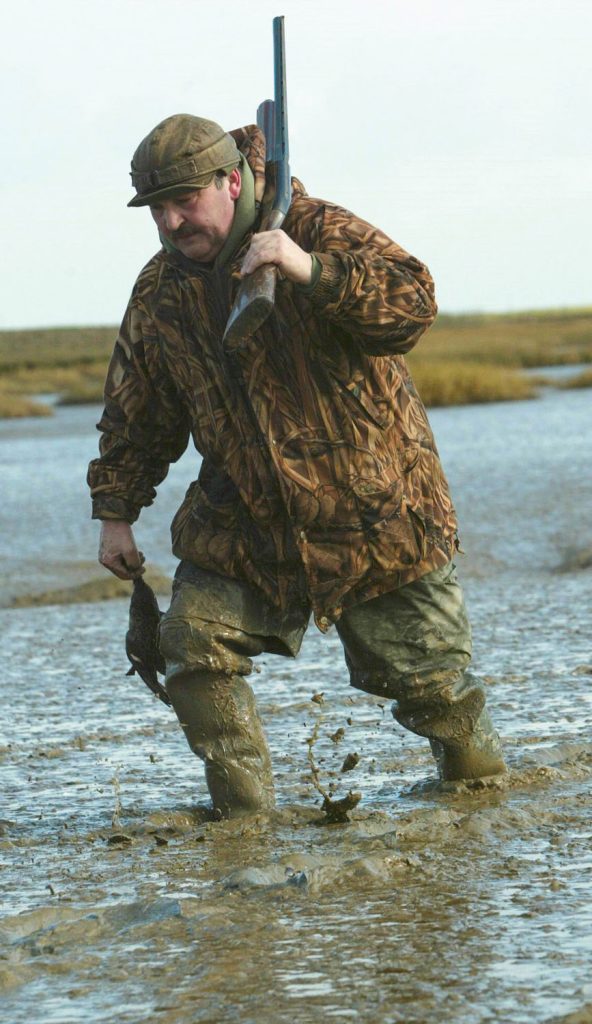
Common quarry species in UK wildfowling
If the Protection of Birds Act 1954 wiped away many species from the quarry list, then the Wildlife and Countryside Act 1981 largely finished the job. Many species were given full protection, including all the sea ducks, with the exception of goldeneye, and almost all the shore waders; golden plover and snipe remain legal quarry, with jack snipe also available in Northern Ireland.
Current machinations among the regulators now see other species under threat of full protection. Natural England seem to use often shallow science to forbid the shooting of such species as common pochard and pintail, under Notices of Consent issued periodically to clubs. There are various rumblings about the status of other species, such as teal and wigeon which thus far the wildfowling community has managed to forestall.
The phenomenon of ‘short-stopping’ is a factor of climate change, with plenty of birds in the Western Palaearctic flyway. However those opposed to our sport try to use the status of Special Protection Areas as a stick to beat us with, notwithstanding the millions of birds stacked up in Europe each winter.
In North America, the use of Adaptive Harvest Management (AHM) – whereby bag numbers are regulated each winter – has credibility with wildfowlers because of the ability to fully assess population numbers on that continent. Similar attempts seem to be made here, without (it seems to me) the necessary flyway science on which to base AHM.
Species which are still available to us are: greylag goose, pink-footed goose, European white-fronted goose, Canada goose, mallard, wigeon, teal, pintail, gadwall, shoveler, tufted duck, common pochard, goldeneye, golden plover and common snipe. Other species, such as wood pigeons and corvids are now under stricter General Licences and as a rule of thumb cannot be legally shot in most Special Protection Areas. So too is the ever-spreading Egyptian goose.
Species identification for ducks and geese
Species recognition is assisted by a number of factors. Each species has its own distinctive call, and can be easily recognised by such. The geese in particular are invariably very vocal, and should not be confused with such non-quarry species as dark-bellied brent (found mostly on southern and eastern coastal areas) or light-bellied brent and barnacle geese (found mostly on western and northern areas). There are some excellent online platforms available which give such key indicators as calls, silhouettes and flight patterns.
UK wildfowling hot spots and estuaries
Around the coast there are some famed estuaries, largely because writers such as I have made them famous. For example in England that great bay The Wash, which touches both Norfolk and Lincolnshire shores, is noted for its prodigious numbers of geese and wigeon. The famous Solway Firth on the Scottish side of the estuary provides a lot of free shooting, whilst on the English shore the wildfowling is controlled by clubs. Inland, the Ouse Washes, which run through Norfolk and Cambridgeshire, are also noted for the large concentrations of a variety of duck species and for the sport provided again mostly by clubs.
Many of our clubs provide help and advice for newcomers and experienced alike. This may be in the form of mentoring programmes, talks or guided trips out to the marshes. This sort of support can often be crucial for those entering the sport for the first time.
Best time of day for wildfowling
A big proportion of wildfowling is carried out at flighting birds – that is birds travelling from one place to another. This invariably occurs at dawn and dusk, although other movement does occur from time to time, often in response to the movement of the tide. On the foreshore good sport can be enjoyed by decoying birds as the tide floods, but always great care needs to be taken with tide heights; this means either picking a tide which will be safe for shooting, or choosing a location where it is possible to get back to the safety of the seawall.
Decoying ducks and geese on the foreshore
Decoying tactics will often bring the best sport, but as with all things conditions – particularly weather – will be crucial. In general, a good wind will help with all wildfowling, decoying being no exception. The same applies to the moon; given the right sky conditions (some cloud, but not too much!) shooting can in general take place on about three nights either side of the full moon.
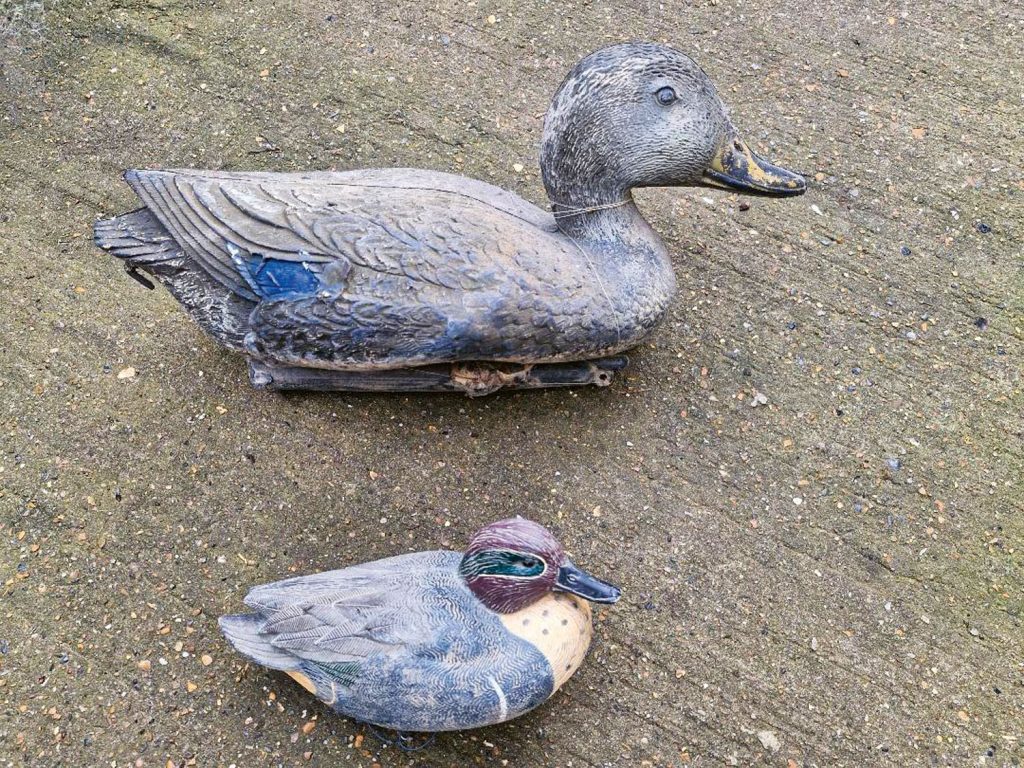
The use of decoys is very much a matter of personal choice. Decoys can vary from small teal to magnum mallard, with each having their uses. Large patterns of decoys are more likely to come into their own on big waters, with smaller numbers coming into their own when decoying around the saltmarshes. Most of my best bags have been when using just two teal decoys, including over low water creeks, the advantages of which are that they are light to carry and take up less room in your rucksack.
Hide building and concealment on the marsh
The same applies to hides, where I opt for lightweight netting and poles. Care needs to be taken when choosing netting, for some will absorb water in wet conditions, and end up weighing several times their dry weight. When there is a long hike out to the marshes, how much to carry and the hope of a good bag of birds to bring off will be an important consideration. A big rucksack to house decoys, hide, flask, food and dead birds is essential.
Wildfowling dogs and retrieving in tidal conditions
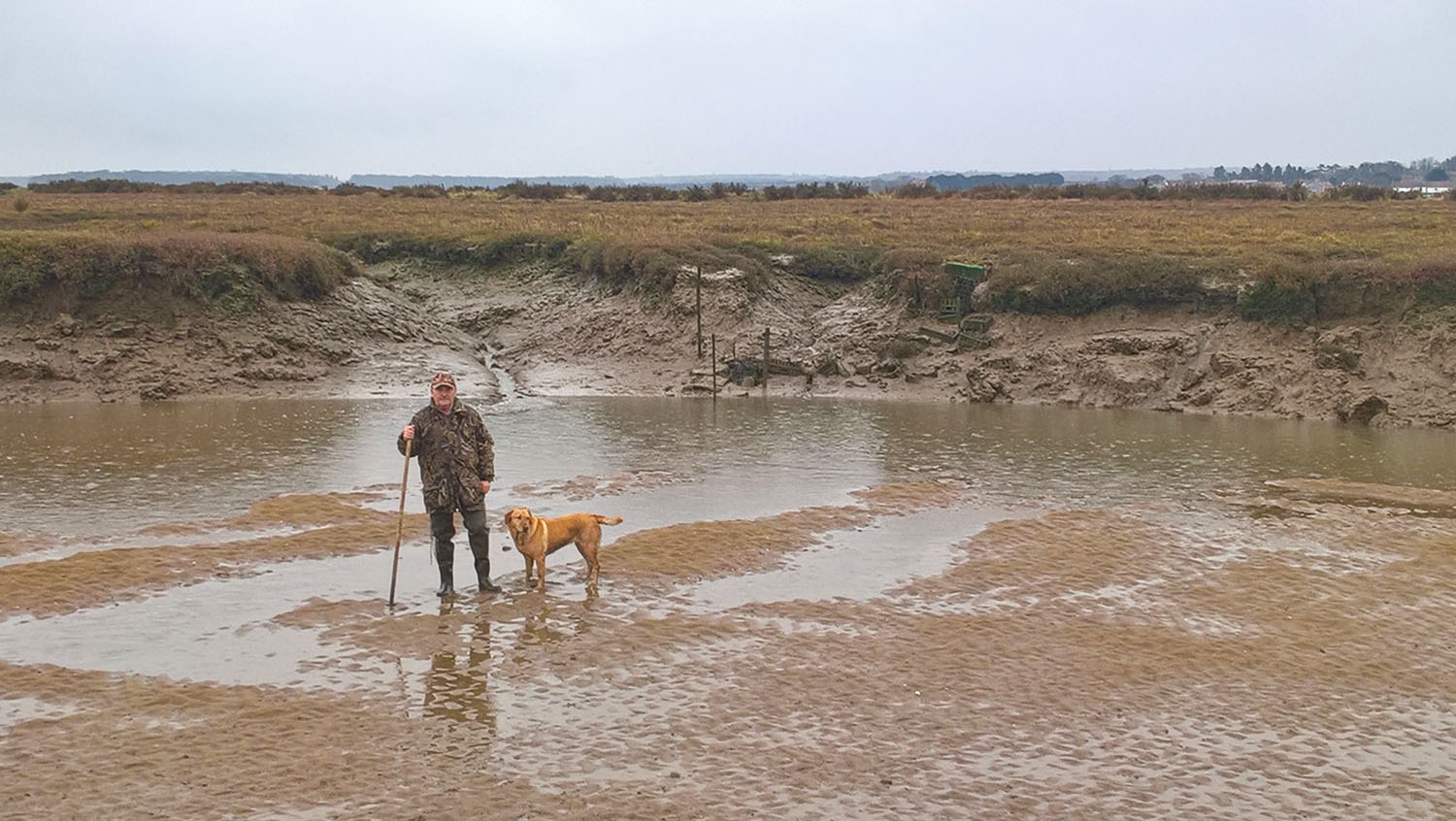
For serious wildfowling out on the shore, with the tide all around, the ability to retrieve shot birds is crucial. It can be a real struggle to find birds in the gloom of flight or those that fall into the tide, which means a trained dog is essential under those circumstances. In less demanding environments on the fresh marshes, a dog can be less of a necessity but always to be preferred.
Guns & ammunition for coastal shooting
Choice of gun should be guided by the type of shooting being carried out and the cartridge loads needed. A standard game gun can be quite adequate under many circumstances. However, when serious flighting for geese and high duck, heavier loads are essential, and the gun needs to match that requirement.
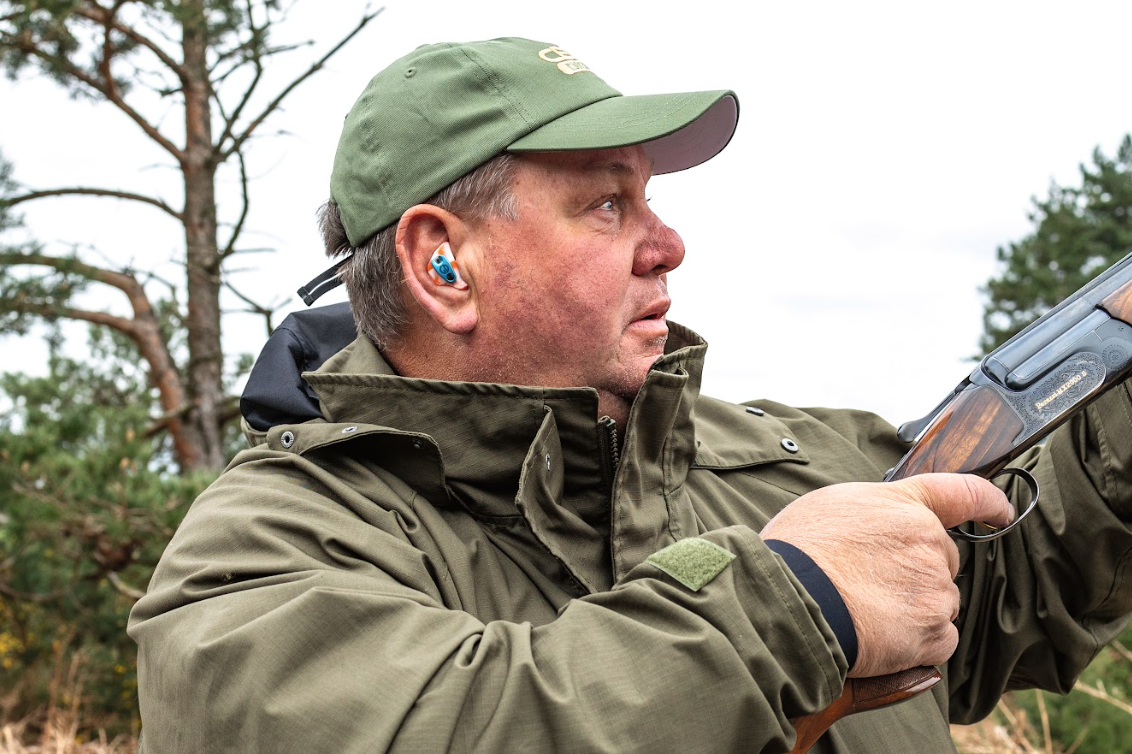
I have used semi-automatic Berettas for decades, finding them ideal for this sort of shooting. The current offer of a camouflaged synthetic finish helps to combat the corrosive nature of the coastal environment, with mud and grit and in places sand prevalent. I have two identical guns – the Beretta A350 – with a 3.5” chamber. These guns will fire small to large steel loads with impunity, giving me the sort of flexibility with a single weapon which I need for all-round wildfowling under a variety of conditions and circumstances.
Alan Jarrett’s Essential Specialist Equipment List for Wildfowling
- Thigh waders: Le Chameau neoprene-lined thigh boots
- Chest waders: Cabelas
- Parka: Browning Grand Passage Jacket or Rivers West Kentdale Jacket, or short Rivers West wader jacket if wearing chest waders
- Headwear: Ball cap/woollen cap
- Gloves: Woollen Thinsulate gloves (dry weather) or Gore-Tex Drake gloves (wet weather)
- Shotgun: Semi-automatic Beretta A350 in half choke
- Cartridges: Gamebore Super Steel 32g 5s (decoying duck); Gamebore Mammoth 36g 3s (flighting duck and geese); Gamebore Mammoth 42g 3s (flighting geese)
- Hide netting: (lightweight!) in rustic winter colours with hide poles
- Decoys: Tidepool
- Calls: Tidepool
- Large rucksack: Jack Pyke decoy bag
- Thermos flask: Stanley
- Wading pole
- Labrador: Yellow
Safety considerations for coastal shooting
A big proportion of wildfowling is carried out at flighting birds – that is birds travelling from one place to another. This invariably occurs at dawn and dusk, although other movement does occur from time to time, often in response to the movement of the tide. On the foreshore good sport can be enjoyed by decoying birds as the tide floods, but always great care needs to be taken with tide heights; this means either picking a tide which will be safe for shooting, or choosing a location where it is possible to get back to the safety of the seawall.
Joining a wildfowling club
The purpose of this article is to provide a quick run-through of a complex subject with a huge number of variables. Fortunately, the wildfowling club network provides good entry and support for those starting out, and should be the first port of call for the beginner. Indeed, many experienced wildfowlers often benefit from joining clubs covering different areas.
Related Articles

High Lodge Shooting Ground: clay shooting in Suffolk
Seven-time world champion John Bidwell built High Lodge in Suffolk to match the finest grounds he had shot in his career, and today his family carry on that vision with world-class clays, expert tuiti...
By Ben Palfreyman

Simulated game shooting at great Tew Estate in the Cotswolds
Ben Palfreyman joins a syndicate day at Great Tew Estate in the heart of the Cotswolds, where simulated game shooting since the 1990s keeps Guns returning year after year for the drives, the scenery a...
By Matt Kidd
Get the latest news delivered direct to your door
Subscribe to Sporting Gun
Sporting Gun has been the trusted voice of the shooting community since 1978, and a subscription is the best way to make sure you never miss a word of it.
For just £4.99 an issue – 37% less than the newsstand price – you’ll receive Britain’s leading shooting magazine delivered to your door before it hits the shelves. Every issue is packed with expert gundog training advice, in-depth shotgun and cartridge reviews, technique features from professional shots, pigeon and wildfowling coverage and the people and stories that define the sport.
In a world of endless scrolling, a magazine is something different – a moment to slow down, read properly and absorb knowledge that makes you a better shot. Back issues become a reference library worth keeping.