★ Win a HÄRKILA Kenmore shooting waistcoat worth £299.99! Click here to enter ★
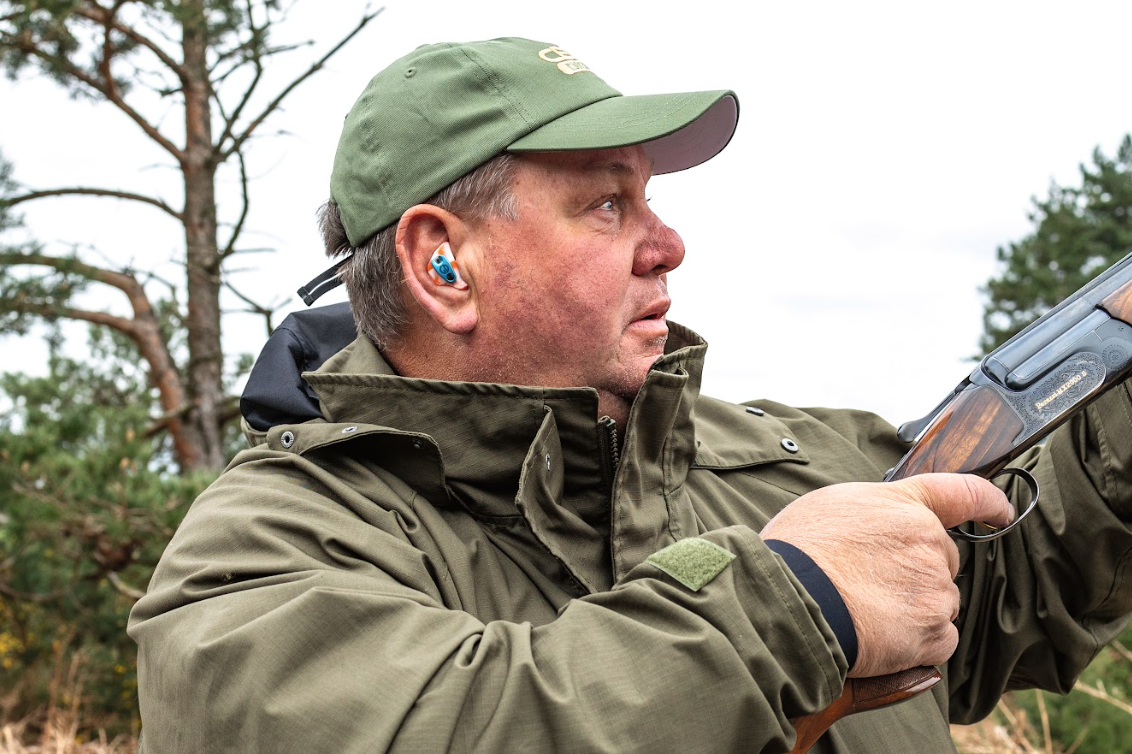

Clay shooting coaching with Phil Gray: the first lesson
Standing in front one of Britain’s finest clay shots and coaches is a humbling experience. Matt Kidd reports on his first clay shooting lesson with Phil Gray, where bad habits are exposed and improvement begins

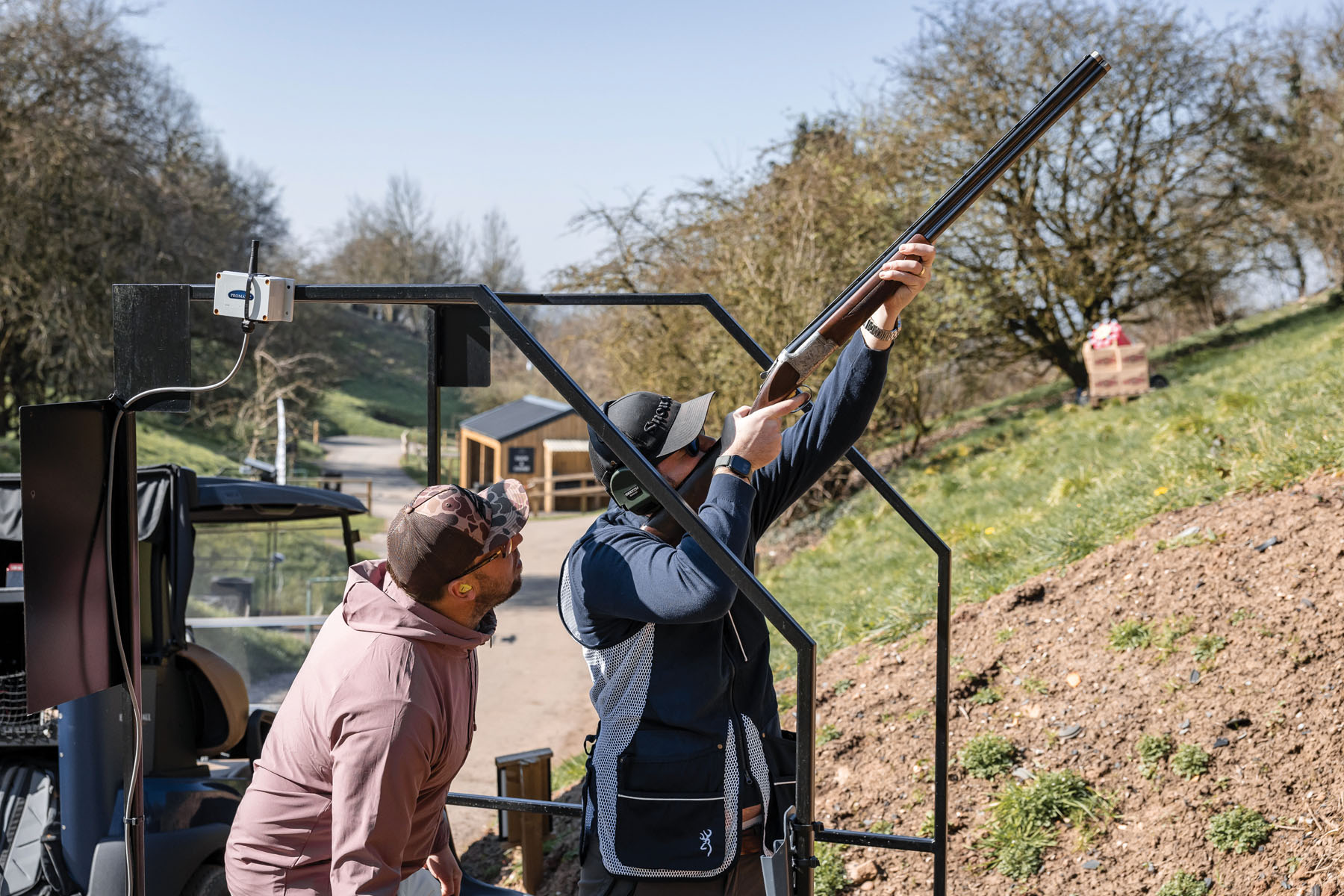
I can shoot. Or at least, I have always thought I can.
I have shot a fair amount of game, plenty of pigeons, clays (socially) and the odd simulated day, all to an acceptable standard. So I am not someone arriving at a shooting ground unable to mount a gun or read a target at all. But having now retired from competitive cricket, I have decided I want to take clay shooting more seriously – potentially even competitively.
That, of course, is a very different thing.
Starting clay shooting coaching with a professional instructor
So for the first part of a new series, I headed to Eaton Hall to meet Phil Gray. Phil is one of the top clay shots in the country, former guest editor, and, having moved into full-time coaching over the past year, is now spending more of his time helping others of varying abilities to improve. The plan was simple enough: start at the beginning, work out where I am, and begin the process of turning a capable sporting shot into a much better, and hopefully more competitive, one.
Naturally, the moment you stand with someone of Phil’s calibre watching every move, you do silly things. It feels unnatural, slightly tense and not at all like the way you normally shoot. But once that settles, the value of proper sporting clays tuition becomes obvious very quickly.

How clay shooting coaching sessions begin
“The first job is not to teach, but to watch,” admits Phil. “Which is particularly important for someone I have never seen shoot clays before. The reason is simple: there is no sense changing something that already works. A shooter may have a method that is different to what I would do, but still holds together well.”
Equally, a shooter may do plenty of things right and only need one or two adjustments or there are some very specific areas to improve on. So, rather than diving in with technical overload, Phil prefers to build a picture first – feet, eyes, body position, hold point, kill point, gun movement, timing. He will often move around while you are shooting, quietly taking it all in.
If someone tells him they shoot regularly, he will usually put them straight onto report pairs and simply let them shoot. Three or four pairs on one stand, perhaps another stand after that – maybe 20 or 30 clays in total before he says very much at all. He is not too bothered if you miss or hit targets at this stage.
Common faults when moving from game shooting to clays
What quickly became clear with me was that Phil was not trying to reinvent everything. He was trying to separate the useful instincts of a game shot from the habits that do not translate well into sporting clays.
His view was that I shoot like a game shooter, like many readers, no doubt. “That isn’t meant critically,” he assured me, “more that you already know how to mount a gun, move a gun and react to a target, which is a good thing – but you could approach clays with a much better structure and consistency.”
The biggest fault he picked up almost immediately was gun speed. In simple terms, I was moving the gun too quickly. On relatively slow crossing targets in particular, I was seeing the clay, reacting to it and firing in the sort of instinctive way (often with little corrections due to not setting up correctly nor consistently). That is okay in the field, but which makes competitive clay shooting far less repeatable.
My misses, Phil pointed out, were largely in front – which surprised me – and nearly all of them due to too much gun speed and not enough of a plan. That, in turn, led to other faults. If the gun moved too fast, I lost awareness of the barrel and began checking it. And once I started that, the whole move became snatched, disjointed and inconsistent.
Pick-up hold and kill points in sporting clays tuition
One of the most useful things Phil gave me was a clearer structure for how to approach a target.
“Every clay starts with three things: pick-up point, hold point and kill point.” Phil explains, “The pick-up point is where you first see the clay properly. Not necessarily the first tiny flash of orange or black that is then obscured, but the first place you can connect with it visually and start to read it. The earlier you can do that, the more time you create for yourself. I like to give myself the maximum amount of time on every clay.
“The kill point is where you want to break the target. Usually, that is where it looks biggest and clearest, and where the shot makes the most sense in terms of angle, pace and distance.
“The hold point,” he adds, “sits in relation to those other two and is often personal preference. This is where you hold your gun when you call for a clay, or from where you start the cycle for your second clay if shooting on report. For me, that is 40 per cent of the way between my pick up point and my kill point.” While these terms are familiar to me enough already, how I have previously perceived them was in need of much improvement.

Why time is key in clay shooting coaching
One of Phil’s biggest messages all day: time is your friend. The more time you create between seeing the target and killing it, the calmer and smoother your shot becomes. Panic comes when you run out of time. That is why Phil picks 40 per cent, as this allows enough time for every shot; any later and a shot can become rushed, any earlier in most examples is inefficient.
As someone used to more instinctive shooting, I found that particularly useful. Rather than just seeing a clay and going after it, I needed to learn to build the shot before I called for it.
Another tip for increasing time is where disciplines allow (such as in Sporting) you can be fully mounted on your hold point, with just your eyes going back to the pick up point, or adopting just a very close mount. Keeping a mount for the second clay, if on report, is also more efficient in most circumstances.
Why smoother gun movement beats speed in sporting clays
Phil’s other repeated message was that the gun only needs to move just faster than the clay.
It sounds obvious, but it is remarkable how easy it is to overdo it. On one crosser after another, I was effectively throwing the gun with my hands at the target. In my head I was behind it, but in reality the gun was moving so aggressively that I was going through the line too fast and missing in front. Phil demonstrated it perfectly, copying my method and then using his. In the latter, his gun appeared to move slowly, yet that was down to his core rotation being so efficient, and the shot arrived exactly where it needed to be.
That was a recurring theme throughout the lesson. Good shooters often look unhurried – not because they are slow, but because their movements are efficient and their plan is utterly sound.
Once I began to slow the move down, with an effective hold point, letting the clay travel a touch more and trusting that the barrel would get there without being forced, the targets started to break cleanly.
Shooting method and lead in clay shooting coaching
Another interesting part of the lesson was Phil’s take on method. Because I naturally come in from behind a target, often required for driven game, he was not about to strip that away on day one. In his view, a first lesson should not be about changing everything. It should be about making the shooter better with what they already have, then gradually introducing new ideas over time.
So on most of the crossing targets, we stuck with a swing-through approach: place the gun behind the clay, move through it at the right speed, build the picture and fire. That suited where I am now and gave us something solid to improve.
Phil also talked through the different ways targets can and should be shot. Some targets, he believes, demand certain methods. A driven bird or a teal, for example, is naturally suited to the swing-through method, because otherwise the clay never comes into view. By contrast, a dropping target or overhead, going-away target is far more naturally shot with maintained lead, because trying to swing through them often means losing sight of the target. Equally, Phil prefers to shoot a dropping target this way, versus where it stops, because the point where a clay stalls could be fractionally different every time, due to wind etc – and makes it more of a challenge to be consistent.
This also underlined a wider point. Clay shooting is not just about lead. It is about method, timing and control. Phil was adamant on that point: “A coach cannot really teach lead pictures in isolation, but they can teach sound technique, and it is personal depending on your three key points and method as to how much lead a clay might need. Miss with the right technique and you will always be close. Hit one with the wrong technique and you have learnt very little.”
The transition from game shooter to clay shooter
Perhaps the most interesting thread running through the lesson was the difference between game shooting instincts and clay shooting discipline. “A game shot can get away with reacting, mounting late, making do and relying on hand-eye coordination”, he says. “In competition, you need more than that. You need repeatability. You need to be able to produce the same shot four times, not one good shot out of four.”
That is why Phil kept bringing me back to the same things: stable hold points, repeatable kill points, smooth gun movement and trusting what I saw. The aim was not to make me robotic, but to make the process more dependable.
He was also realistic enough to point out that no coach fixes anyone in two hours. A first lesson is about direction, not transformation.
Sporting clays tuition homework and next steps
By the end of the session, the homework was clear. Phil wants me on steady crossing targets, nothing too wild, where I can practise the fundamentals properly. The goal is to build a more repeatable shot: same hold point, same kill point, same gun speed, same movement to the target.
In other words, stop shooting clays like I am reacting to live quarry and start shooting them like a competitive shot – with a plan.
That means reading the clay properly, deciding how it should be approached, and then executing the shot in a controlled way. It also means putting shells through the gun. “Lessons only work if the work is done afterwards,” and Phil is refreshingly honest on that point. “Progress depends as much on what happens between lessons as in them.”
For a first session, it was revealing. I did not come away feeling I had been rebuilt, nor should I have done. What I did come away with was a much better understanding of where my shooting breaks down, and how to begin tightening it up.
The good news is that Phil thinks there is plenty to work with. The bad news is that I now have no excuse not to put the hours in.
Visit @PGP Coaching on Facebook.
Get the latest news delivered direct to your door
Subscribe to Sporting Gun
Sporting Gun has been the trusted voice of the shooting community since 1978, and a subscription is the best way to make sure you never miss a word of it.
For just £4.99 an issue – 37% less than the newsstand price – you’ll receive Britain’s leading shooting magazine delivered to your door before it hits the shelves. Every issue is packed with expert gundog training advice, in-depth shotgun and cartridge reviews, technique features from professional shots, pigeon and wildfowling coverage and the people and stories that define the sport.
In a world of endless scrolling, a magazine is something different – a moment to slow down, read properly and absorb knowledge that makes you a better shot. Back issues become a reference library worth keeping.