Home/On-the-peg game shooting instruction with John Lee
Shooting
On-the-peg game shooting instruction with John Lee
Richard Faulks joins renowned shot and coach John Lee at the Worlaby Shoot to discover how his calm guidance, sharp eye and practical fieldcraft help experienced Guns get the very best from their shooting
Sporting Gun12 May 2026
Have you ever had one of those days when you’re out on a peg and the wheels fall off? I think we all have – and it can be incredibly frustrating and embarrassing. You’ve looked forward to your day, often spent a great deal of money and things just don’t go the way you’ve been hoping for. The big question then is – what am I doing wrong? Is it the line or the lead, bad footwork or are you just rolling off the shot? There are a multitude of possible problems to try to correct. This is where good and knowledgeable advice will make all the difference to your day and get you back on track and shooting to the best of your ability.
Game shooting coaching with John Lee in the field
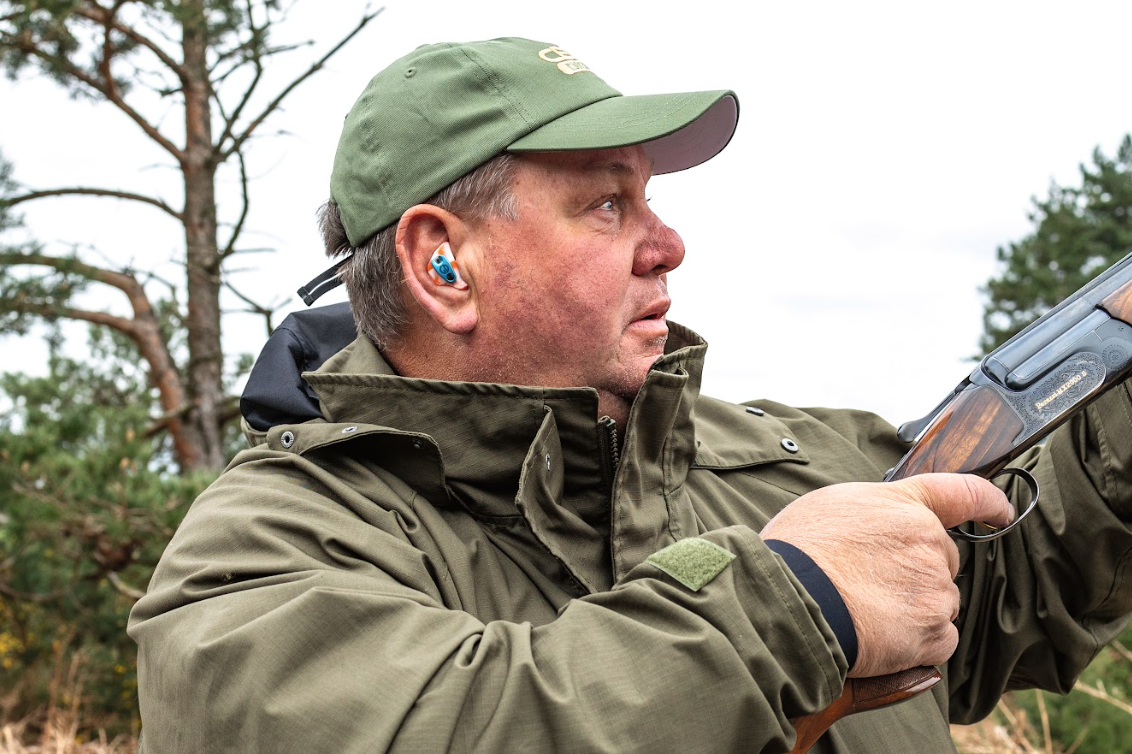
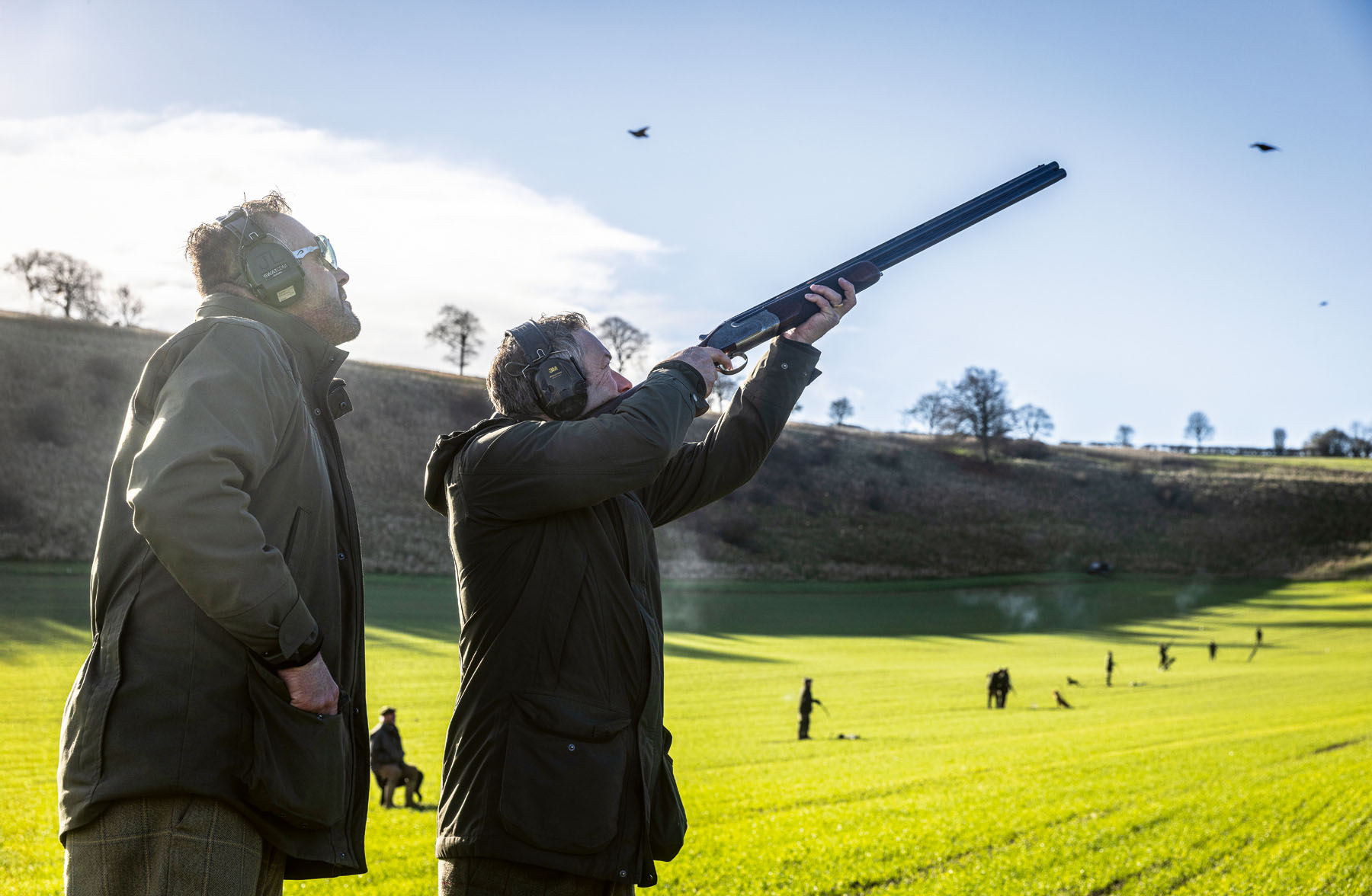
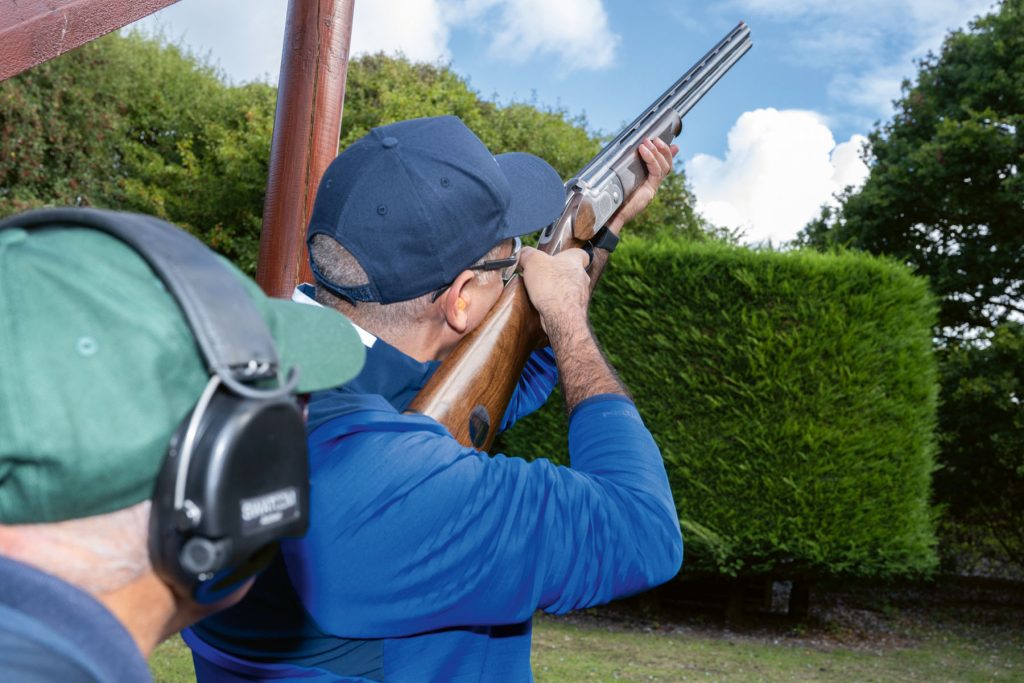
Renowned shot John Lee often spends a day in the field with guns that appreciate a little guidance and coaching. Having John on your shoulder whispering a few sage words when needed on each drive could make all the difference to your day and hopefully put a smile on your face at the end of it. I joined him John and his client Steve for the day at Worlaby Shoot in the Lincolnshire Wolds to see just how he goes about coaching an already experienced shot.
Why clay ground preparation improves game shooting performance
Steve had lessons with John over the close season at the clay ground, so John has a good idea of Steve’s strengths and weaknesses. John told me that he now never takes on a client if he hasn’t had time to give them some tuition at the clay ground first, because he just doesn’t think it’s fair on his client for the day. He’ll have no idea of their standard of shooting, what they should be working on or whether he can make the changes needed out in the field. They may have eye dominance problems or a badly fitting gun, so it could be a waste of time and money for the client to pay for John to join them. Meeting them at least a couple of times in the more relaxed and controllable environment of a clay ground, allows John to get a real measure of who they are as a shot and what they want to achieve.
He says: “I won’t go with people I don’t know because I just feel that it’s not good for them. Neither is it good for me. So how I work is, if somebody wants me to accompany them on a day, then we will have a couple of sessions, on the clays beforehand. So they know me and I know them. We’ve built up a bit of a relationship, so I can tweak them. You say things they can then relate to and quickly adjust to on the peg. If you don’t know somebody it’s very, very difficult to do any good on four drives.”
The knowledge gained can then be taken out into the field and John can deliver targeted and effective coaching on the day that will be far more constructive for the Gun and more advantageous to John as well.
On the peg instruction during a live game shooting day
Worlaby is a shoot that certainly doesn’t struggle to find a few birds, so it was the perfect sort of day for Steve to have John on-peg with him. Also this was Steve’s day and he was hosting it for friends that he regularly shoots with. Over the close season John and Steve had worked together on perfecting a swing-through style of shooting, which John feels is the best method to achieve consistent performance for the majority of Guns.
“In the past, Steve had a tendency to mount the gun on the bird or in front of the bird before pulling away to take the shot. This tended to force him to pull away and often off-line from the bird, with a bigger push then being needed to gain the required lead,” explains John. “The swing-through method slows the shooter down and smooths out any erratic gun movement if executed correctly. It also helps the muzzle stay on the line of the bird. So now Steve mounts his gun behind the bird, swings at a more consistent speed up to the bird, past the bird, and takes the shot while keeping the gun smooth and steady after the shot is taken.
“A lot of game shooters, just hoick the gun from a low hold and then just waft through. Keeping it slow is key. What we’re trying to do here is gain a little bit of a connection to the bird before we start moving the barrels. This lets our eyes settle so that we can lead into a hard focus on the bird before introducing any lead. This technique stops us watching the space too much or even watching where the gun is.” A laser-like fix on the target – be it clay or game – is a crucial detail that cannot be stressed too much, according to John.
Timing and trigger control in game shooting instruction
John explains that he can’t tell the gun when to pull the trigger, that just comes from experience, but if somebody is consistently giving birds too much or too little lead, mounting too early or too late, John will advise accordingly and get them back on track.
“My job is to make sure that a Gun is doing what he should be doing. If someone is consistently giving the birds too much or too little, then I might intervene and say, ‘Look, mate, you’re just overdoing these a little bit. They’re not as quick as you think.’ Or conversely, ‘They’re going a bit quicker than you think’. But as we all know, every bird is different.”
Pre-drive checks for better game shooting results
John’s tuition begins as soon as he and his client arrive on the peg. There are many things to look for that will give you good clues to what the game birds will do before the drive even starts. Wind direction is one crucial thing that every Gun should take note of. A cross wind will make birds slide in one direction or the other. If you miss a bird, that information might well be one piece of the puzzle that will get you back on target again.
Also check behind you. Does the land fall away or is there a bank or trees? These may also give clues as to what the flight of the birds will be. When they start coming, watch what the birds are doing. Are their wings still flapping or are they gliding with set wings when going over the line, and where and how far away from you did they get airborne? If their wings are still flapping and they took off near you, they will still be accelerating and gaining height. If they appear over trees with wings flapping they probably will be getting up to speed and flying fairly level. If they appeared from the top of a hill and the wings are set, they are likely up to their maximum speed and could be dropping in height.
Much of this sounds a bit obvious, but when the adrenaline is flowing and there are birds in the air, these things are often forgotten. So being gently reminded by someone like John to slow yourself down, pick a bird, stay with that bird and remember technique can be useful.
Delivering clear and digestible shooting advice on the peg
John prefers to nurture the client into shooting well and staying calm. Giving them too much information in one go can be counterproductive and confusing. Just telling somebody that they are shooting low and behind is of little use to them. They need to be helped to read the line of the bird and reminded where their technique went wrong on that shot.
“It is about easing them into good habits, and above all, keeping their confidence up and making it fun for them,” John says. “Sometimes people need reminding that they’re actually shooting well and to forget the birds they miss. Dwelling on misses does nothing for our performance. Everybody misses a percentage of birds and perhaps it’s because they’re pushing their limits, which is how we grow.
“I’m certainly there to keep clients in a good place mentally, and have a laugh in the process. When a person’s head drops, that is when all sorts of unforced errors happen, such as throwing the barrels up in a desperation to kill the bird, rather than actually going back to the foundations they have worked on.”
The value of on the peg game shooting instruction
John’s enthusiasm for coaching is obvious and he happily admits: “Its the best job in the world.” He’s a very likeable chap, easy to get along with and hugely knowledgeable about all kinds of shotgun shooting. He has a way of breaking down the elements and delivers them in a way that any shooter can understand to allow them to shoot to the best of their ability. The information he offers feels more like advice from a friend than a coach and, above all, having John on the peg with you makes a day in the field even more fun.
When I ask Steve if he would recommend others to have John on the peg with him, he replies: “He really knows his stuff. He’s always giving me insightful tips, and I get the reassurance of knowing that what I’m reading is what John’s reading. People often ask me: ‘Why do you keep having him standing with you, because you’re a good shot?’ My answer is that I still want to improve. Plus, I really enjoy having John’s company.”
From what I saw, John certainly added value to Steve’s day and they both seemed to have great fun along the way!
This article contains affiliate links. If you click on one of these links and make a purchase, we may earn a small commission at no additional cost to you. Affiliate income helps us maintain the quality of our content and keep it freely accessible.
All recommendations are based on our honest opinions and thorough research.Would you like to appear on our site? We offer sponsored articles and advertising to put you in front of our readers.
Find out more
Matt Kidd joins Olympic gold medallist Nathan Hales to discover the skills, technique and mental focus required for the holy grail of Trap shooting disciplines
Ben Palfreyman experiences a memorable partridge shoot at Compton Beauchamp, where heritage, hospitality and sporting excellence combine in the heart of West Berkshire
Geoff Garrod reflects on a difficult pigeon shooting winter, the challenges of low bird numbers, and a rewarding late roost shooting outing that offers hope for the months ahead
Jasper Fellows visits West Kent Shooting School, which stands as one of the UK’s most enduring clay shooting venues. What began in 1974 as a modest setup on a disused RAF airfield has evolved into ...
By Sporting Gun
Get the latest news delivered direct to your door
Subscribe to Sporting Gun
Sporting Gun has been the trusted voice of the shooting community since 1978, and a subscription is the best way to make sure you never miss a word of it.
For just £4.99 an issue – 37% less than the newsstand price – you’ll receive Britain’s leading shooting magazine delivered to your door before it hits the shelves. Every issue is packed with expert gundog training advice, in-depth shotgun and cartridge reviews, technique features from professional shots, pigeon and wildfowling coverage and the people and stories that define the sport.
In a world of endless scrolling, a magazine is something different – a moment to slow down, read properly and absorb knowledge that makes you a better shot. Back issues become a reference library worth keeping.
To provide the best experiences, we use technologies like cookies to store and/or access device information. Consenting to these technologies will allow us to process data such as browsing behavior or unique IDs on this site. Not consenting or withdrawing consent, may adversely affect certain features and functions.
Functional
Always active
The technical storage or access is strictly necessary for the legitimate purpose of enabling the use of a specific service explicitly requested by the subscriber or user, or for the sole purpose of carrying out the transmission of a communication over an electronic communications network.
Preferences
The technical storage or access is necessary for the legitimate purpose of storing preferences that are not requested by the subscriber or user.
Statistics
The technical storage or access that is used exclusively for statistical purposes.The technical storage or access that is used exclusively for anonymous statistical purposes. Without a subpoena, voluntary compliance on the part of your Internet Service Provider, or additional records from a third party, information stored or retrieved for this purpose alone cannot usually be used to identify you.
Marketing
The technical storage or access is required to create user profiles to send advertising, or to track the user on a website or across several websites for similar marketing purposes.