Home / Steel shot and classic shotguns: How to keep your favourite gun in the field
Shotguns

Steel shot and classic shotguns: How to keep your favourite gun in the field

With the UK lead ammunition phase-out approaching, discover what owners of classic shotguns must know about steel shot to keep them shooting safely

Sporting Gun
Sporting Gun 26 February 2026
Steel shot and classic shotguns: How to keep your favourite gun in the field

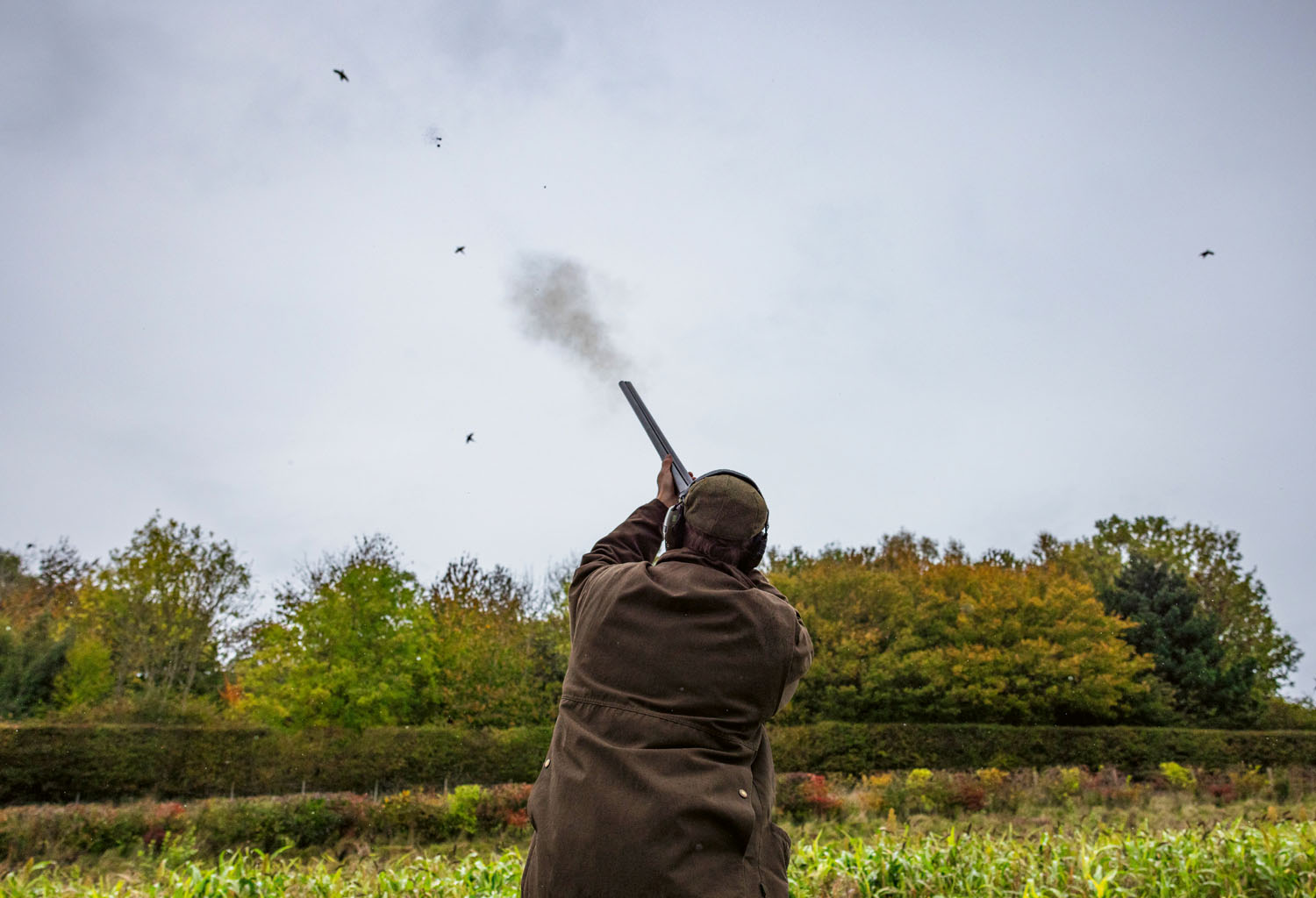
As the transition away from lead ammunition gathers pace, many shooters are questioning what the future holds for their cherished classic shotguns. Iconic British game guns like an english side-by-side, were never designed with modern steel loads in mind, yet with the right knowledge and careful assessment, many can continue to be enjoyed in the field. Understanding proof, chamber length, barrel condition and ammunition choices will be essential for anyone hoping to balance tradition with the realities of a changing sporting landscape. By Matt Simpson

The shift away from lead and what it means for classic guns

With the proposed phase-out of lead ammunition set to begin in summer 2026 – and a full transition planned across all shooting sports with limited exemptions for the military, police, elite athletes, museum collections and small-calibre bullets such as .22 LR – few subjects provoke more concern or confusion than the implications of this legislation for the classic side-by-side shotgun. Side-by-sides, particularly best English examples built from the late Victorian era to the mid-20th century, have always been more than mere sporting tools. They represent one of Britain’s finest craft industries, making guns prized for elegance, balance and exceptional handling. Yet as the sporting world shifts steadily towards steel ammunition, the traditional engineering principles behind these guns increasingly conflict with modern ballistic demands. Classic side-by-sides are likely to be the most affected by the transition, largely because they were originally designed as light, quick-handling game guns. That philosophy leaves little material in the barrels and makes them less suited to the harder, non-deforming nature of steel shot. In contrast, most over-and-unders are built to be more robust, heavier and capable of withstanding the high-volume use common on the clay ground. While exceptions do of course exist, the majority of over-and-unders are naturally more compatible with standard steel loads than is the case with their traditional side-by-side counterparts. Where an over-and-under has fixed chokes of ¾ or tighter, and the owner wishes to use standard or high-performance steel, the chokes will need to be opened to below half – provided the gun is stamped with the fleur de lys. In some cases the chamber length must be adjusted to suit available ammunition. Another option is to convert fixed-choke barrels to multichoke, provided there is adequate wall thickness. Any such work must be followed by reproofing. As a rough guide, adjusting fixed chokes usually costs around £100 per barrel, while fitting multi-chokes – including a set of three or four tubes – is likely to cost somewhere in the region of £650. Understanding the changes ahead, and the practical consequences for both shooters and collectors, has never been more important than it is now


Proof House rules and ‘standard’ steel load compatibility

Under current proof house recommendations, a shotgun must meet several conditions to be considered suitable for standard steel. No guidance exists for the use of steel in guns that have not been through proof since 1954. Pre-1954 guns remain safe for lead provided they are in proof and in sound mechanical order. Post-1954 proofed guns, with clean bores free of dents, dings and pitting, and with chokes below half (for example 0.020in on a 12-bore, though many prefer 0.016-0.017in for safety) are generally considered suitable for standard steel, provided the cartridge length matches the chamber length. At first glance this suggests that a large number of guns are steel-capable. However, standard steel remains unsuitable for Damascus barrels, for which bismuth is the most practical non-toxic alternative.

Chamber length and steel cartridge limitations

Most British game guns from the 19th and 20th centuries were built with 2½in (65mm) chambers, the industry standard of the time. Today most factory-loaded standard steel cartridges are 2¾in (70mm), restricting what can be used safely. Although a small number of manufacturers are now producing 65mm steel cartridges, availability remains limited. In 2025 only a handful of short-chamber steel loads could be readily found in the UK. However, if the shift from lead progresses as expected, demand for 65mm loads will rise sharply, though manufacturers will not be able to expand production instantly. The likely outcome is a period of patchy supply, limited choice and higher prices. Chambers can be lengthened from 65mm or 2¾in to 70mm, though the gun must then be submitted for reproofing. It is also worth noting that in older guns, where the stock has thinned through decades of refinishing, heavier loads may increase recoil to a level that is detrimental to the stock’s long-term integrity.

Barrel wall thickness and pressure considerations

Unlike chamber length, barrel wall thickness is a universal limiting factor for steel use. Old British game guns typically left the bench with minimum wall thicknesses of 0.025-0.032in, which was well suited to the lower pressures and softer pellets of lead. Over years of use, cleaning, dent removal and refinishing, barrels gradually lose metal. Many classic guns today show minimum thicknesses of 0.018-0.022in. Why is this important? Standard steel operates at pressures similar to modern nitro lead loads. Steel pellets do not deform, altering their interaction with the bore and chokes. This non-deformation increases the need for generous safety margins in barrel strength. In the trade, a minimum of around 0.024in is generally considered necessary for standard steel, compared with approximately 0.020in for lead. Below this, guns may remain suitable for lead, bismuth or softer non-toxic alternatives, but steel becomes progressively unsuitable. Many English guns were deliberately made light – 6¼lb was typical for a 12-bore, and some were even lighter. This gave them their celebrated handling qualities but presents clear limitations in the steel era.

Barrel sleeving as an engineering solution

For guns lacking the wall thickness required for steel, sleeving is the only dependable engineering solution. The original breech section is retained while new tubes are fitted. A reputable sleeving job typically costs £2,500 or more, depending on the complexity. Additional work such as re-engraving or rejointing can increase the total. Ordinary English boxlocks often sell for £50 to £800. Mid-grade sidelocks will generally sit somewhere between £800 and £3,500. These figures highlight the central dilemma: sleeving frequently costs as much as, or more than, the gun itself. Commissioning new barrels from the original maker is possible, but with London firms charging well into the tens of thousands. It is viable only for the most valuable or historically important guns.

Balancing financial value and sentimental worth

Sleeving significantly reduces market value, as originality is prized. Auction houses typically list sleeved guns at 30-50% less than comparable unsleeved examples, depending on the maker. Nevertheless many owners choose to sleeve their guns for sentimental rather than financial reasons. Perhaps it belonged to a family member, fits exceptionally well, carries memories of seasons past or represents a link to previous generations. In the era of steel these emotional motivations will increasingly dictate whether a gun is kept shooting.

Non-toxic shotgun ammunition alternatives to steel

Because steel places the greatest engineering demands on a gun, many shooters will look towards softer non-toxic alternatives. Bismuth is appealing but costly. Modern bismuth behaves far more like lead and is generally safe for use in classic guns that remain in proof. Its drawbacks are cost (£1.20 to £2.50 per cartridge), variable availability, and payload limits of around 28-32g. For high-volume driven days it is uneconomical, but for walked-up sport, woodcock or modest mixed-bag days, it provides a comfortable compromise – and is still likely to be the cheapest part of the day. Tungsten-based loads are another option. Dense tungsten-matrix loads are safe for classic barrels but cost even more – often £3 to £5 per cartridge. These cartridges will remain very specialist rather than everyday options.

What the next decade will bring for classic guns

Looking ahead, owners of classic side-by-sides should expect the following:

  • 65mm steel loads will expand slowly – production changes take time, so choice will never equal that of 70mm cartridges.
  • Guns meeting post-1954 proof and choke requirements will remain usable with standard steel, provided wall thickness allows. Check with a gunsmith. These will become the most desirable working classics.
  • More guns will be sleeved, especially where sentiment outweighs financial considerations.
  • Many guns will become lead-only heritage pieces, used with bismuth on a limited basis, much like vintage cars that only run on specialist fuel.
  • Market values will polarise, with best London guns retaining strong demand, mid-tier boxlocks becoming affordable entry points, and sleeved guns forming a new category of practical but modernised classics.

The enduring future of the British side-by-side

The phase-out of lead marks a major turning point in British shooting. While the challenges are real and sometimes unavoidable, this transition does not spell the end of the classic side-by-side. Instead, its place in the sporting world is evolving. These guns will increasingly be valued not for financial worth but for what they represent: craftsmanship from a vanished era; connections to family history; handling qualities rarely matched by modern guns; the simple pleasure of carrying something beautiful in the field. As steel becomes the norm and lead fades into history, the classic British game gun will endure – upheld by tradition, sentiment and the regard of those who understand its significance. Fewer may be seen in the field, but those that remain will be carried with greater pride. I will always remember a comment from my old master, passed on from one of his customers: “By all means, sir, you may entertain my wife, but don’t touch my guns.” It encapsulates the enduring bond forged between a shooter and their gun after many seasons in the field – and long may that bond continue.

This article contains affiliate links. If you click on one of these links and make a purchase, we may earn a small commission at no additional cost to you. Affiliate income helps us maintain the quality of our content and keep it freely accessible. All recommendations are based on our honest opinions and thorough research. Would you like to appear on our site? We offer sponsored articles and advertising to put you in front of our readers.  Find out more

Related Buying Guides