★ Beat print – get early access to the news by signing up to the Sporting Gun newsletter here ★
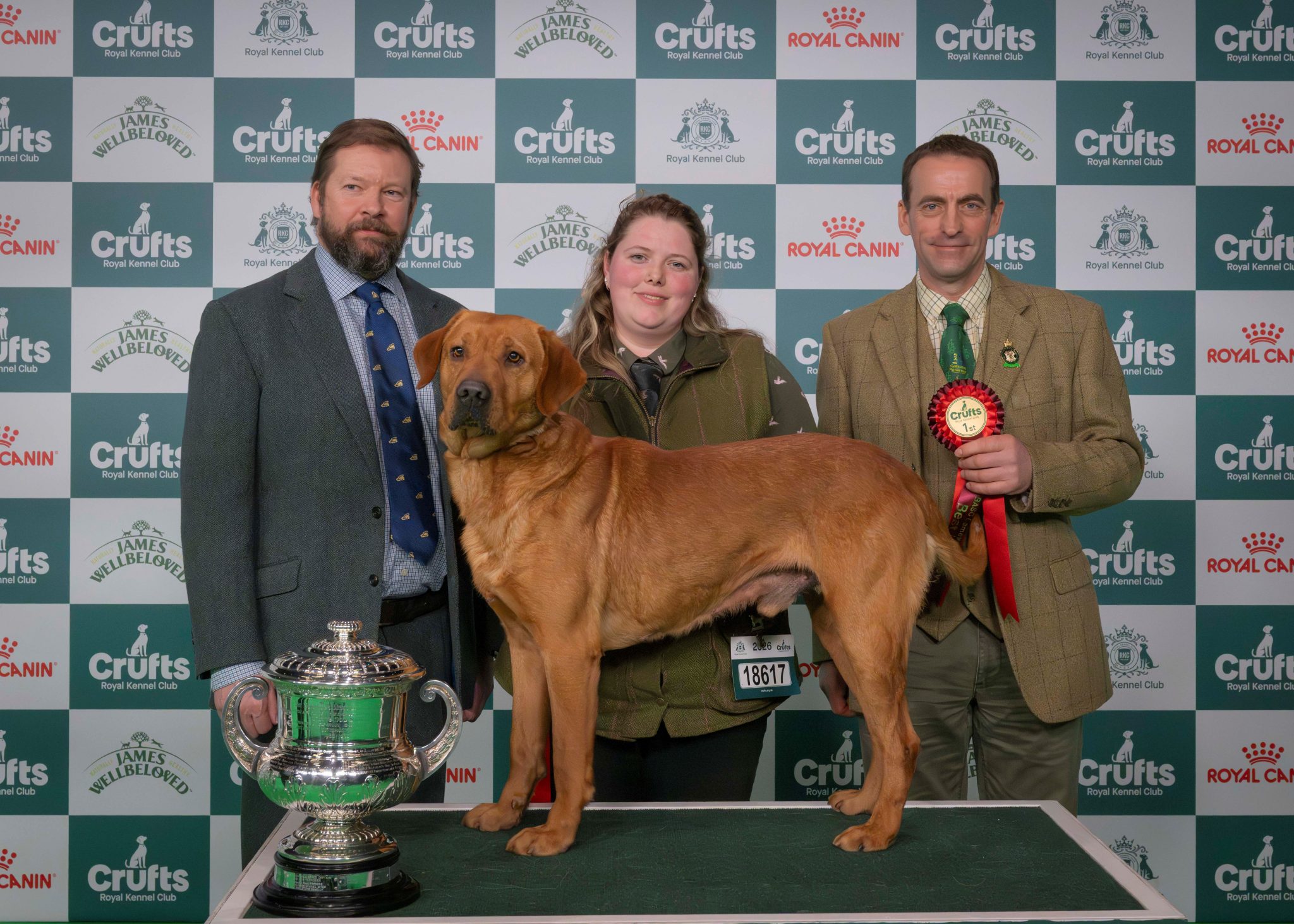

Exclusive interview with top gundog trainer, David Latham
After nearly five decades at the top of Labrador training, David Latham reflects on his career, his champion dogs and his pursuit of a historic fifth IGL Retriever Championship title
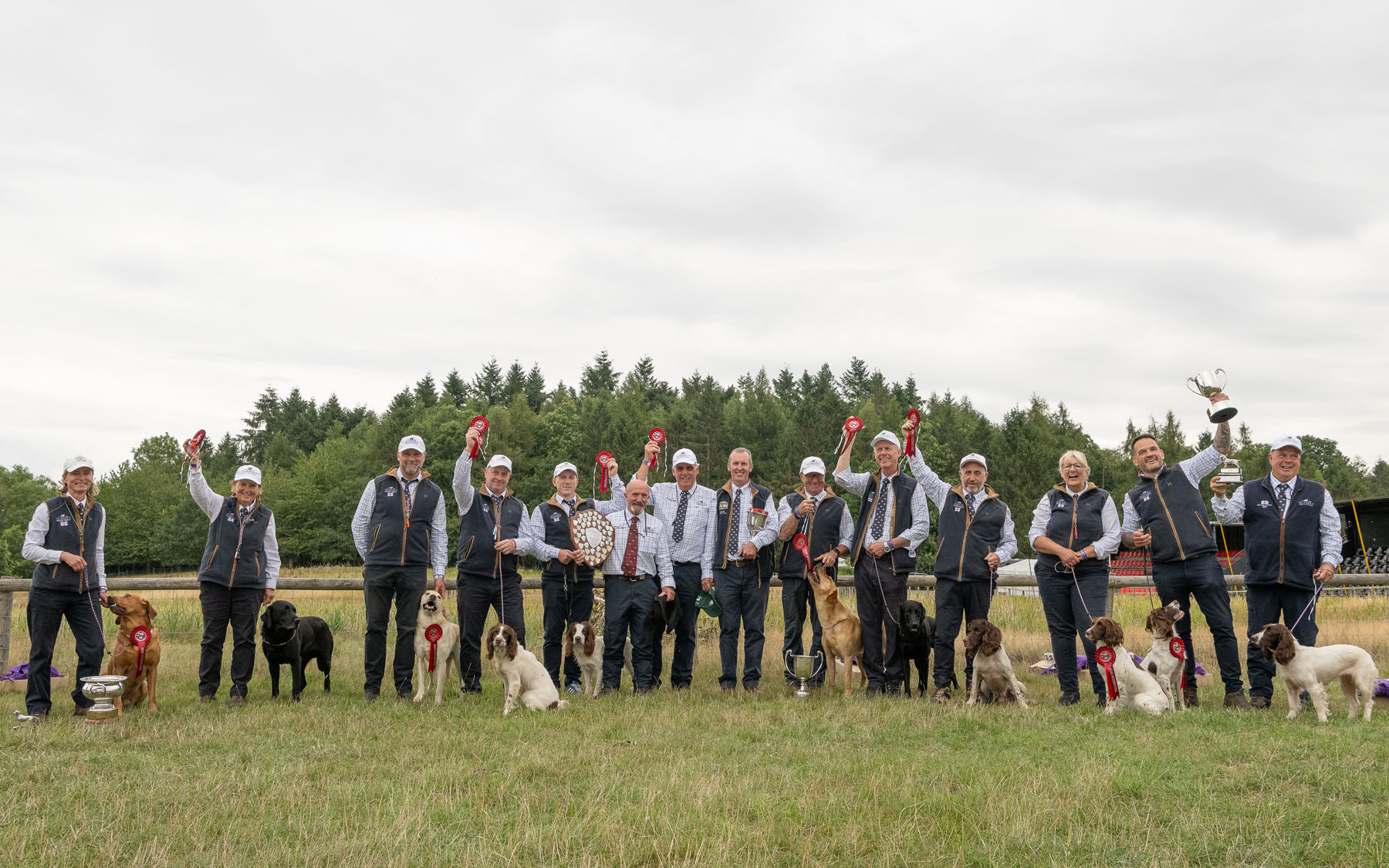

“Never did end up owning one,” says David Latham, when asked about the spaniel his teenage self desperately wanted. At 14, he’d begged his father for a springer. The response was characteristically blunt: “You’re not having a bloody spaniel!” That Christmas his Dad bought him a Labrador named Gunstock Selena Sal, a little black bitch who would change everything.
Five decades later, Latham has won the IGL Retriever Championship four times, made up nine Field Trial Champions, and captained England for 11 years. He’s done it all without ever owning the breed he first coveted.
From First Labrador to Field Trial Success
The roots run deep. Growing up in Middlewich, Cheshire, Latham’s father was a keen rabbiter who worked longdogs, and weekend expeditions with nets and ferrets planted the seed. A schoolfriend’s father kept a spaniel cross for shooting, providing Latham’s first glimpse of a proper gundog at work.
But it was that black Labrador bitch who would prove formative, despite his initial ignorance. “I knew nothing about gundogs,” he admits. “I used her for catching rabbits and running them into a long net at night.”
Rough shooting and practical work gradually sparked something deeper. A training class with Northwest Labs opened his eyes to dummies, game bags, whistles – the formal apparatus of gundog training.
When he grew serious, he ordered Drakeshead Matt from Sandra Halstead, a dog out of Glencoin Drummer. Matt would be his ticket in. Their first trial came in 1991 at Three Ridings near Northallerton. They won.
“That was a good start,” he says with typical understatement. “It kind of just grew from there.”

Champion Labradors and Breeding Legacy
Now aged 60, David’s kennel houses around a dozen Labradors, including Field Trial Champions Meadowlark Big Rock (Rocky) and Fendawood Harold (Ricky). His latest project borders on the audacious: three puppies sired by Field Trial Champion Mediterranean Blue, using frozen semen collected over 20 years ago.
“I took semen off him and kept it. My idea was to wait until there was nothing left by Blue,” he explains. Mediterranean Blue was one of the first fox red Labradors to make a significant impact at stud, and Latham has waited two decades for the right bitch.
“My girlfriend has a really smart, fast, stylish bitch named Mikamores Cher.” The puppies, now six or seven months old, represent a genetic bridge across time. For David, temperament trumps everything. “It’s the most single important part of a dog in my opinion, because if they haven’t got the right character, it’ll come and bite you on the bum during the course of the trials.”
Rocky and Ricky prove his point about individuality. “They’re like chalk and cheese,” he says. “Ricky is a small little dog really, very fast, very stylish. He was in all the England teams for four years. Rocky is a great, big, lovely-looking Labrador, but he never liked dummies. But in the field, they’re both as good as each other.”

IGL Retriever Championship Success and Ambition
Ask David about his greatest achievement and the answer comes without hesitation: winning the IGL Championship for the second time. “I think to win it the second time was to prove it wasn’t a fluke.”
He’s now won it four times, equalling John Halstead Senior’s record. “There’s nothing that compares with winning the IGL. Everyone’s watching, and that buzz is unbelievable.”
But he’s quick to add context. The championship has evolved from around 19 dogs competing in that era to up to 70 today. “It’s a different race altogether. You’re against the bird, the weather, the retrieve. I’ve been doing it 40 odd years, and you still come across things you’ve never seen before.”
Not every day brings glory. One story still makes him laugh: running Field Trial Champion Delfleet Neon of Fendawood at Alvington in Wales. The trial had reached the last retrieve, a snipe shot in a sugar beet field. Three dogs failed to find it. Dell went straight out and picked it cleanly.
“I thought, ‘unbelievable.’ He came straight back to me, got right in front of me, and spat the snipe out on the floor. Then he rolled over it on his back.”
The incident became a teaching moment. David collected every snipe he could find and covered every dummy in the house with snipe wings.
Dell remains among his most remarkable dogs. “He went from never being in a competition to winning the IGL in six weeks. I think he was two years and five months when he won it, the third youngest dog in history.”
But David cautions against forcing the pace. “I have two pups now, and one’s four months older than the other, but he’s a big baby. He doesn’t want rushing, where others can take it. You have got to find out what makes them tick.”

The Influence of Beileys Aguzannis of Fendawood
If one dog defined Latham’s career, it’s Field Trial Champion Beileys Aguzannis of Fendawood – Bailey. “To me, he had everything. He was a beautiful, good-looking dog, with a really kind eye, and he was an absolute cracker.”
Bailey won the 2016 IGL Championship and topped The Game Fair. More significantly, he proved exceptional at stud.
“A direct son and his brother also won the championship, which is very rare. I also have a young dog called FTW Mikamores Fahrenheit, who is following in Bailey’s footsteps and showing tremendous promise All my dogs are going back to his line. He was the most prolific sire at the championship for a few years.”
Bailey’s influence courses through the modern field trial scene.
Working Gundogs in the Field and Beyond
David’s route to professional training was anything but linear. He spent 31 years at Rolls-Royce as a coach builder, the security of a good pension and steady salary making the eventual leap daunting. Then a seven-year stint in Austria, running a kennel of around 70 dogs, broadened his experience before he returned home.
He balances training clients’ dogs and trialling with game shooting, running a small walked-up shoot and picking-up weekly at larger estates.
“When I’m not trialling, I take my dogs out so that they can get practical experience. I don’t shoot a lot of birds, but I can go out and shoot half a dozen over my dogs and work on what’s necessary.”
England Captaincy and Future Goals
When John Halstead Snr retired in 2014, David inherited the England captaincy – a role he held for 11 years until stepping down at last year’s Game Fair, which ended with an England victory.
“John is a close friend and a hard act to follow. I had some experience from being in caretaker charge during 2011, when I was doubly proud as the England team won the Skinner’s World Cup and Game Fair that year.” Kevin Doughty now carries the responsibility, with David’s full backing.
This year brings a sabbatical of sorts. “I’m going to take 12 months out, sit back, and let the new captain have a bit of freedom. But I have a nice young dog, Bluecreek Gum Grey. So I’ll have a good summer training with him, and then next year I’ll see if I’ll try out for the team.”
But one ambition burns undimmed: a fifth IGL Championship victory.
“That’s my dream. That’s what keeps me going. I’m not stopping until I can’t walk. I need to win one more. I’m in a super position – I’ve still got a few years left in me yet, so if I can just sneak one more, I’ll be a happy chappie.”
Labradors vs Spaniels: A Lifelong Preference
The spaniel? “Maybe when I retire I might treat myself to one.” For now, it remains Labradors all the way. With the Mediterranean Blue puppies maturing and that fifth championship within reach, David Latham’s story continues to unfold.
Related Articles
People
Exclusive interview with top gundog trainer, Ellena Swift
We catch up with the 2022 and 2025 winner of Gundog Trainer of the Year category – Ellena Swift. She talks about her remarkable journey from German shepherds to Field Trial Champions, what winning t...
By Sporting Gun
People
Exclusive interview with March issue’s guest editor, Andy Crow
Andy Crow, renowned pigeon and crow shooter from Kent, shares decades of pest control expertise, fieldcraft, and knowledge passed down from his grandfather.
By Sporting Gun
Get the latest news delivered direct to your door
Subscribe to Sporting Gun
Sporting Gun has been the trusted voice of the shooting community since 1978, and a subscription is the best way to make sure you never miss a word of it.
For just £3.75 an issue – 46% less than the newsstand price – you’ll receive Britain’s leading shooting magazine delivered to your door before it hits the shelves. Every issue is packed with expert gundog training advice, in-depth shotgun and cartridge reviews, technique features from professional shots, pigeon and wildfowling coverage and the people and stories that define the sport.
In a world of endless scrolling, a magazine is something different – a moment to slow down, read properly and absorb knowledge that makes you a better shot. Back issues become a reference library worth keeping.