★ Beat print – get early access to the news by signing up to the Sporting Gun newsletter here ★

Exclusive interview with February issue’s guest editor, John Lee
From keepering in the Vale of Belvoir to standing on the World Sporting podium, John Lee has built a life entirely around shooting. He talks to us about gamekeeping, pigeons, nerves, fast cars and why he reckons he has the best job in the world

Who is John Lee?
I am a fairly simple chap really. I have been a gamekeeper all my life and I still do a bit of part-time keepering now on a small shoot in Lincolnshire, Scribelsby Estate, where I have been for 16 years. Before that I was on a big commercial shoot on the Leicestershire-Lincolnshire border at Buckminster Estate.
I went to Buckminster pretty much from school and keepering is all I ever wanted to do. As a kid anything to do with traps, pens, vermin, gamebirds or being out with the local keepers had me hooked. These days I look after vermin control and game days for the family estate, and on top of that I coach on clays and in the field. I am also part of the team at East of England Shooting Ground. Every part of my life is shooting in some form and I would not have it any other way.
How did you get into shooting?
My stepfather introduced me to it. My parents split up when I was very young, and when my mum remarried her new husband was heavily into shooting and very friendly with the local gamekeepers. Any spare evening or weekend he had was spent with them, building pens, rabbiting, foxing, pigeon shooting – whatever needed doing.
As soon as I was old enough to tag along I went everywhere with them. From eight or nine years old I was completely absorbed in it. That early exposure to proper keepering and fieldcraft set the course for everything since.
Your biggest shooting successes?
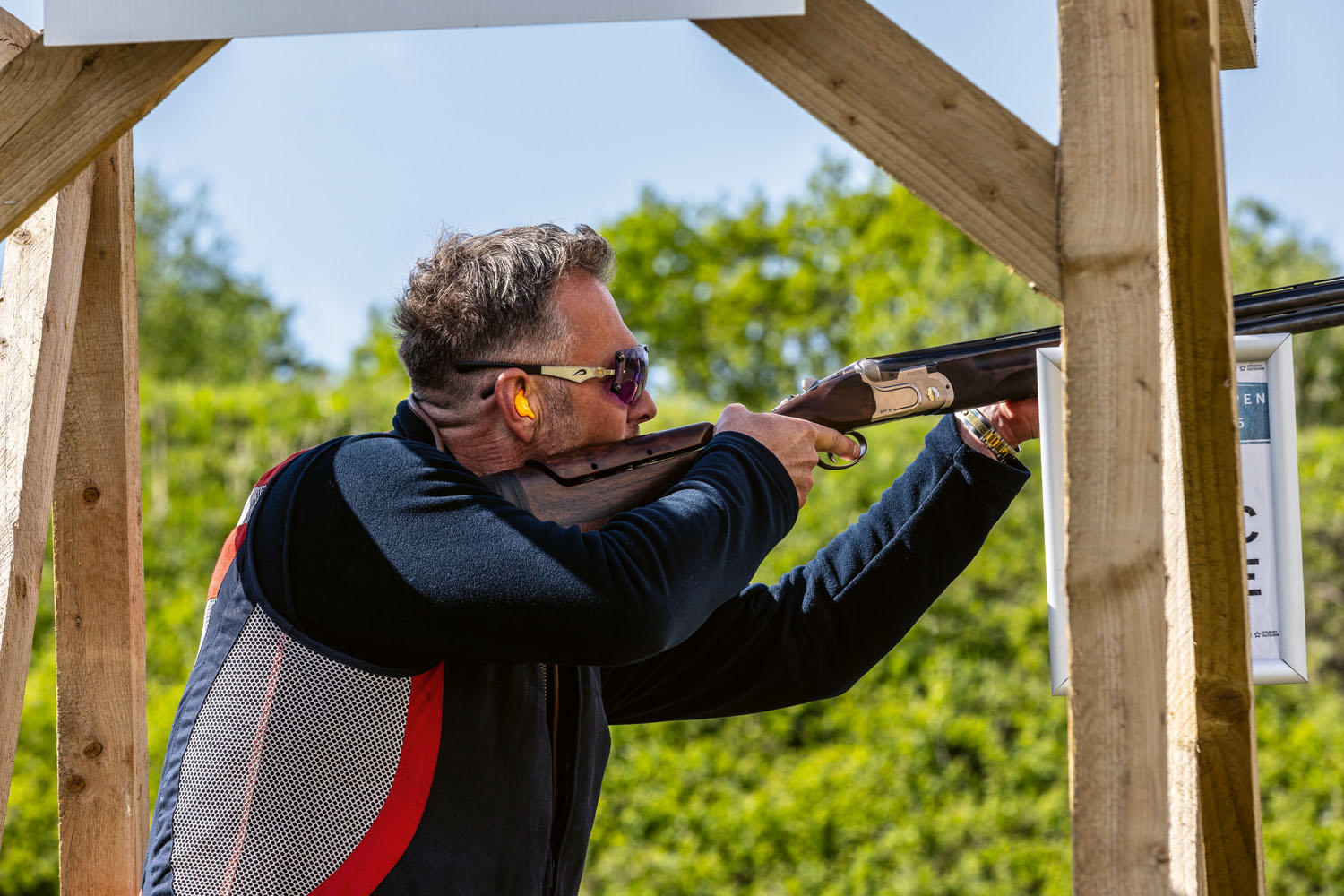
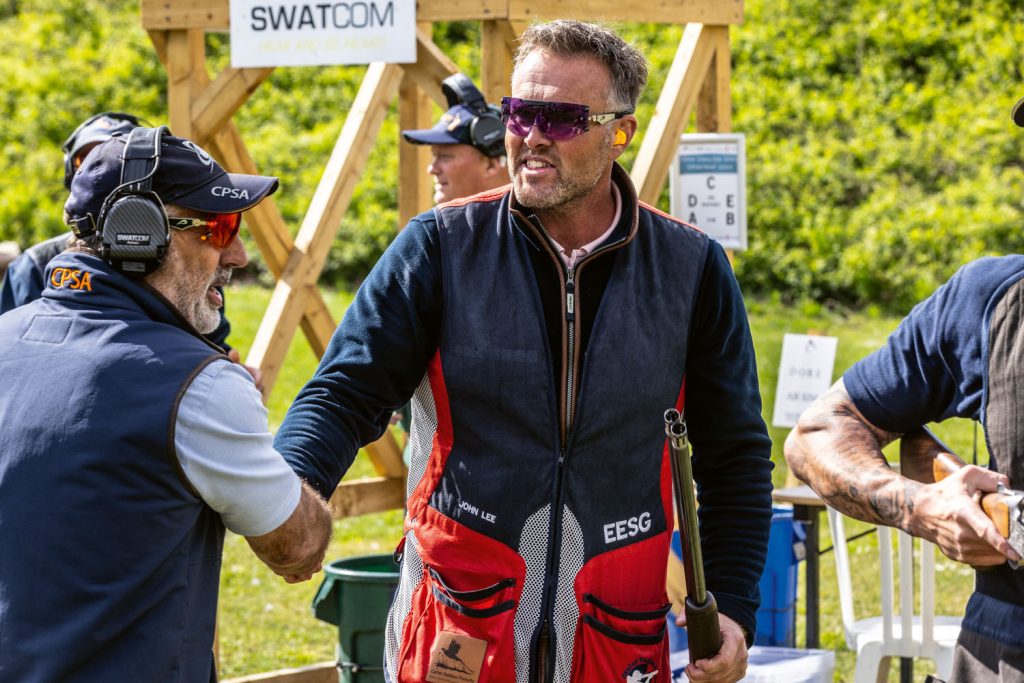
Over the years I have won the Beretta World Championships three times, the Benelli semi-auto Championship twice and the British Open Side-by-Side Championship twice. I have had many 100-straights in Compak and Sporting, been in the mix at English and British majors and placed in just about everything at some point.
But without any doubt it is the bronze medal at the World English Sporting 2025. I only get to shoot it every other year when it is held in this country as I don’t enjoy travelling to shoot. I have shot it for quite a few years, but this one was special. I led all week but on the final day I was beaten by an American on the last rotation and tied with another. That put me into the super-final.
To be in the mix with lads who are shooting around 150,000 cartridges a year, when I do nowhere near that, was a big thing for me. I shot the joint highest score in the super-final in front of a big crowd and I was genuinely happy with third.
What is the secret to your success?
For me it all starts with how hard you look at the target. I am a huge believer that if you look at what you are shooting at properly and let the gun move naturally, without overthinking lead, a lot of good things follow.
While I am always aware of the space, I never measure lead. I have done such a volume of shooting across so many disciplines that I probably have a big ‘shot memory’ in my head. The trick is letting that memory do its job instead of trying not to miss or being too clever. Confidence is everything. On the morning of a big shoot I usually know if I am going to shoot well or not by how I feel.
Tell us about East of England Shooting Ground and your role there.
East of England Shooting Ground was a little practice ground when I first got involved. The owner, Barry Exton, asked me to come in, put my stamp on it and get it on the map. That is what we have done.
Its a tiny venue in the middle of nowhere, but we are now running county and regional championships and fortnightly registered competitions. I plan all the courses, using the banks, water and towers to create as much variety as possible. I spend a lot of time tweaking layouts before a competition to get the balance right from top shot down to the lower classes.
While I am self-employed, I am part of the team. I am usually there a couple of days a week for coaching and course work.
How often are you shooting at the moment?
Through the summer I try to shoot all the majors and usually a registered shoot each week if the weather is decent. In the run-up to a big championship I might spend a bit of time shooting Skeet or testing layouts I have set.
Once the game season starts I hardly shoot clays. My time is spent coaching in the field and I am fortunate that I get invited to some very special days. Clients often become friends, which makes the line between work and pleasure quite blurred. I probably shoot game around 20 days a year.
What is your true passion?
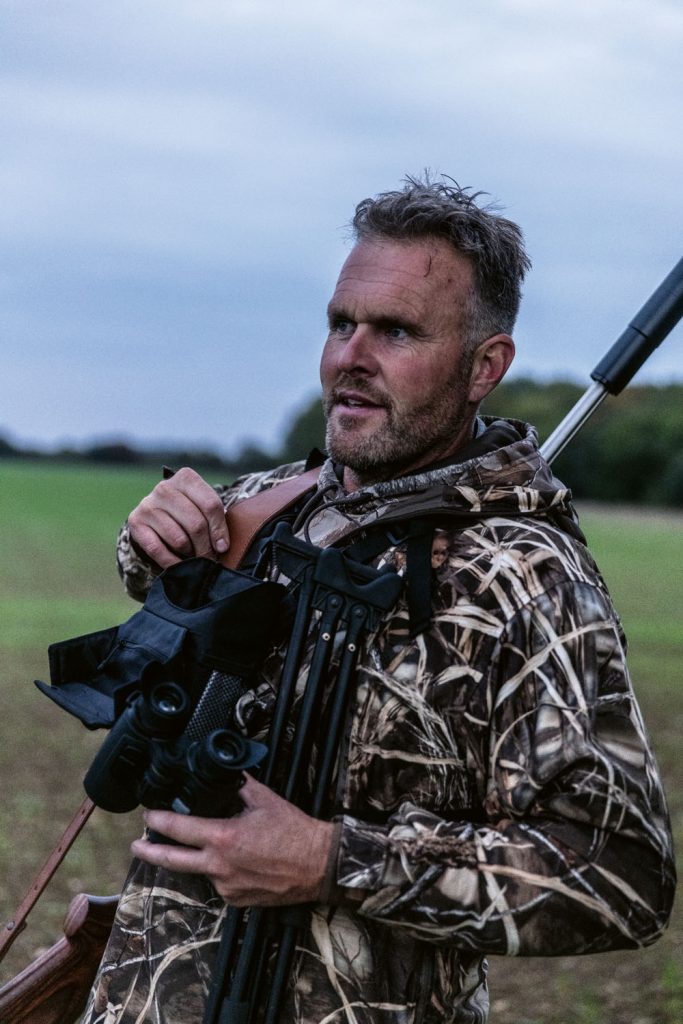
On the game side, I am an extreme pheasant and partridge man. But if I had to pick one quarry it would be wood pigeons. The ultimate is getting under a proper flightline, standing under a thin hedge or line of trees and shooting birds that would cost you a lot of money if they were pheasants or partridges. Shooting 50 or 60 top-end pigeons on a line is very special.
Your tips for pigeon shooting?
If you want to decoy and build big bags, reconnaissance is everything. You have to watch what the birds are doing, where they are coming from, how they are using the field and the wind. You can’t just set up anywhere and expect a red-letter day without putting the hours in first.
Flighting is a bit different. If you spot a line, drop in on it and make the most of the opportunity. Weather plays a big part – you want a windy day so that the pigeons are focused on their destination and the wind helps to muffle your shots.
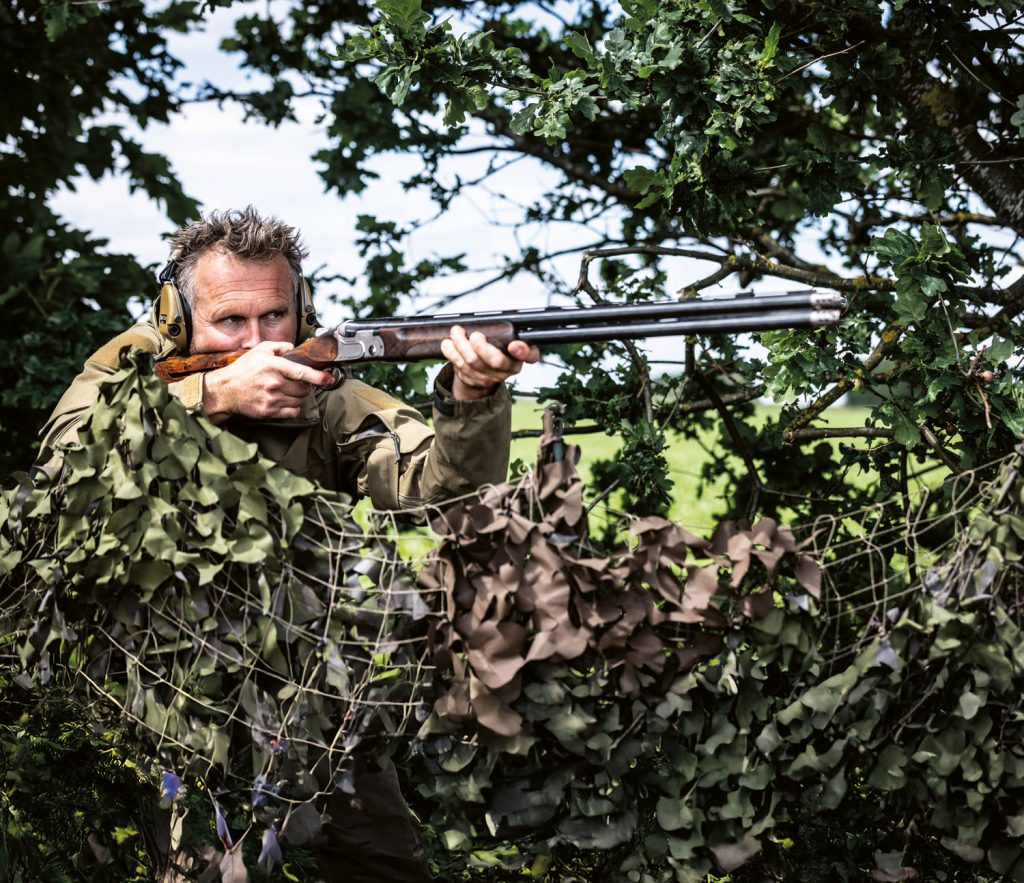
As for kit, use cartridges you trust, get yourself properly hidden and do not forget the background behind you. Plenty of people build a camo hide in front but leave themselves silhouetted from behind – I would rather have a good, dark background, as that is more important than what is in front. A camo face covering can also be highly beneficial.
Do you enjoy rifle shooting?
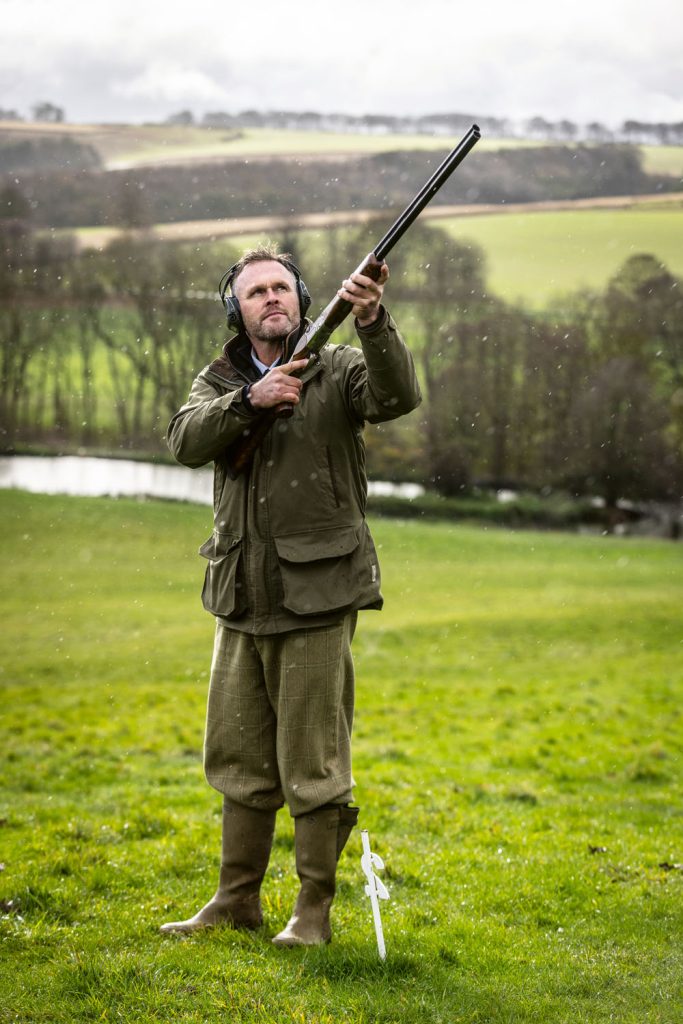
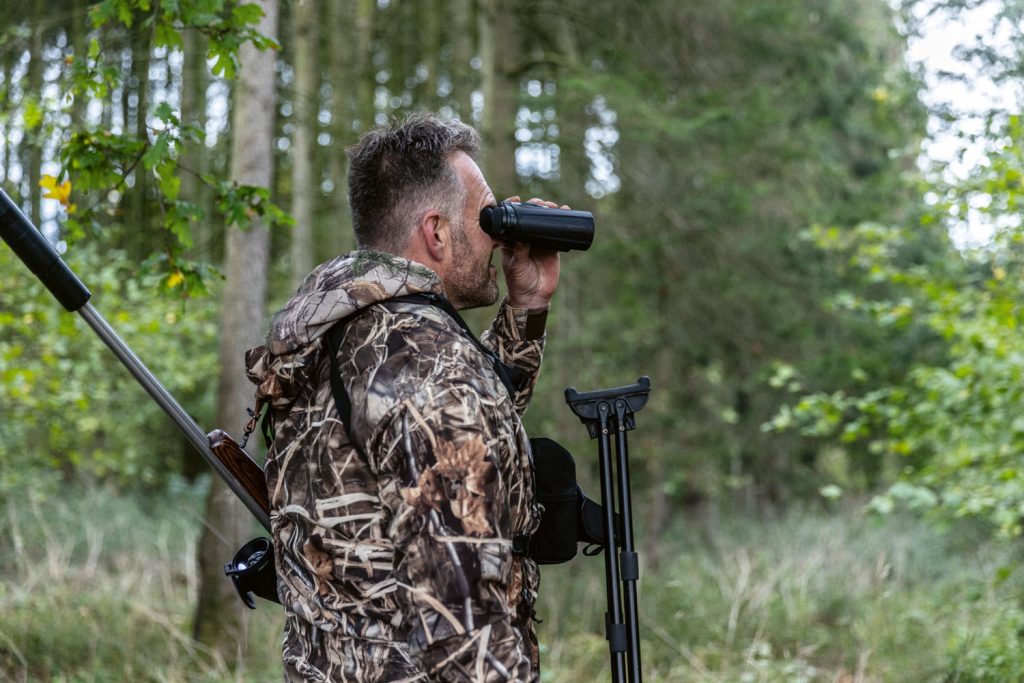
Yes, although deer do not really fire me up. I am lucky to have plenty of deer on my ground and I shoot my share, but my real love with a rifle is foxing. I am fully set up with thermal kit now, which makes it far more efficient. I use highseats and bait stations, but more often I will drive to a gateway, scan with the thermal spotter, then stalk in on sticks – always with the wind in my face. It is a bit of everything – whatever is needed to get the job done.
Who are your sponsors?
GMK and Beretta sponsor me with a DT11. Teague supply my chokes and support. Eley Hawk provides my cartridges, and ClayClo my clothing. East of England Shooting Ground supports me with unlimited clays for practice.
Away from the trade I have fantastic backing from Clark Group Construction, who very kindly fund my cartridges beyond my sponsored allowance. Without that support I would not be able to shoot the number of top competitions I do.
What else is in the kit bag?
I travel light. I shoot 5⁄8 choke in both barrels and very rarely change them. I use electronic ear defenders and Pilla glasses. A bottle of water before and during a 100-bird registered is usually enough and I only occasionally remember to take a snack. I am getting older, so I don’t want to lug around anything I don’t need.
Do you get nervous?
Yes, absolutely. I think everyone does. It is a mix of nerves, excitement and adrenaline. At any majors, Stand 1 is always interesting. The trick is accepting that the feeling will be there and learning to shoot with it rather than trying to get rid of it. If you can get off to a decent start you tend to settle down, but I do not believe that anyone at the top is completely immune from nerves.
Your top shooting tips?
First, look at the target properly. When I shoot well I have looked at the clay 100%, right to the break.
Second, be confident and trust yourself and your shooting.
Third, remember to enjoy what you are doing. That may sound soft, but if you squeeze all the fun out of it you will never shoot your best.
Many top shots say they use competitions as practice. What should a novice or intermediate shooter do?
Whatever your level, you get better by pushing yourself. Look back through your scorecards and identify the types of target you are weak on. Spend your practice time working on those, not just hammering the stuff you can already smoke.
Big rangy birds are where most people struggle because their eyes and brain have not yet seen and learned the pictures they need. Go to a ground that has something similar, stand in that cage and work out what the sight picture needs to be. If you cannot access a coach, simply increase the lead gradually until you start breaking them, then learn that picture.
There is a balance, though. Do not beat yourself up in the cage until your confidence is gone. Have a go, learn what you can, then go back to a couple of stands you know you can hit cleanly to rebuild your confidence.
The best advice you have ever been given?
Remember why you do it. We all want to win and shoot high scores, but you started because you love it. You will have good days and bad, in the field and on the ground. Do not let a bad drive or a bad card make you forget the bigger picture. Once you stop enjoying it, it is probably time to do something else.
Favourite venues and bucket list days?
On clays, Hodnet at West Midlands Shooting Ground is my favourite. They can set targets there that you just do not see anywhere else.
For game, Brigands and Drumlanrig are the two stand-out shoots for me. In terms of a bucket list, I have been very lucky. I have shot pigeons, ducks, deer, foxes and some of the best shoots in the country. My wish now is simply to keep doing more of the same. In my opinion I have the best job in the world.
Who would you most like to share a peg with?
I have been fortunate enough to stand next to my eldest son at Brigands and that takes some beating. So I will say my boys. Sharing a peg with either, or both, of them is as good as it gets.
Do you cook a lot of game?
Me, no. My wife, yes. We use a lot of what I shoot or is shot on the estate. We have kids, and our go-to now is mincing pheasant and making our own burgers. A pheasant breast on a plate does not excite children in the same way as a burger in a brioche bun with cheese and relish.
Tell us something people would be surprised to learn about you.
Shooting is everything. But outside of that, I love a good true-crime series and I love cars. Before my first keepering job, I worked for a company making F1 and touring car panels. I love anything fast – over the years I have had RS Turbos, Cosworths and other high-performance cars. At the moment I drive an SVR Range Rover, but my dream car is a Porsche 911 GT3.
Photography: Richard Faulks
Related Articles
People
Exclusive interview with top gundog trainer, David Latham
After nearly five decades at the top of Labrador training, David Latham reflects on his career, his champion dogs and his pursuit of a historic fifth IGL Retriever Championship title
By Sporting Gun
People
Exclusive interview with top gundog trainer, Ellena Swift
We catch up with the 2022 and 2025 winner of Gundog Trainer of the Year category – Ellena Swift. She talks about her remarkable journey from German shepherds to Field Trial Champions, what winning t...
By Sporting Gun
Get the latest news delivered direct to your door
Subscribe to Sporting Gun
Sporting Gun has been the trusted voice of the shooting community since 1978, and a subscription is the best way to make sure you never miss a word of it.
For just £3.75 an issue – 46% less than the newsstand price – you’ll receive Britain’s leading shooting magazine delivered to your door before it hits the shelves. Every issue is packed with expert gundog training advice, in-depth shotgun and cartridge reviews, technique features from professional shots, pigeon and wildfowling coverage and the people and stories that define the sport.
In a world of endless scrolling, a magazine is something different – a moment to slow down, read properly and absorb knowledge that makes you a better shot. Back issues become a reference library worth keeping.