★ Win a Schöffel Country shooting coat for everyone in your syndicate worth up to £6,000! Enter here ★

Exclusive interview with top gundog trainer, Ellena Swift
We catch up with the 2022 and 2025 winner of Gundog Trainer of the Year category – Ellena Swift. She talks about her remarkable journey from German shepherds to Field Trial Champions, what winning the award twice has meant to her, and why patience – not pace – is the key to excellence
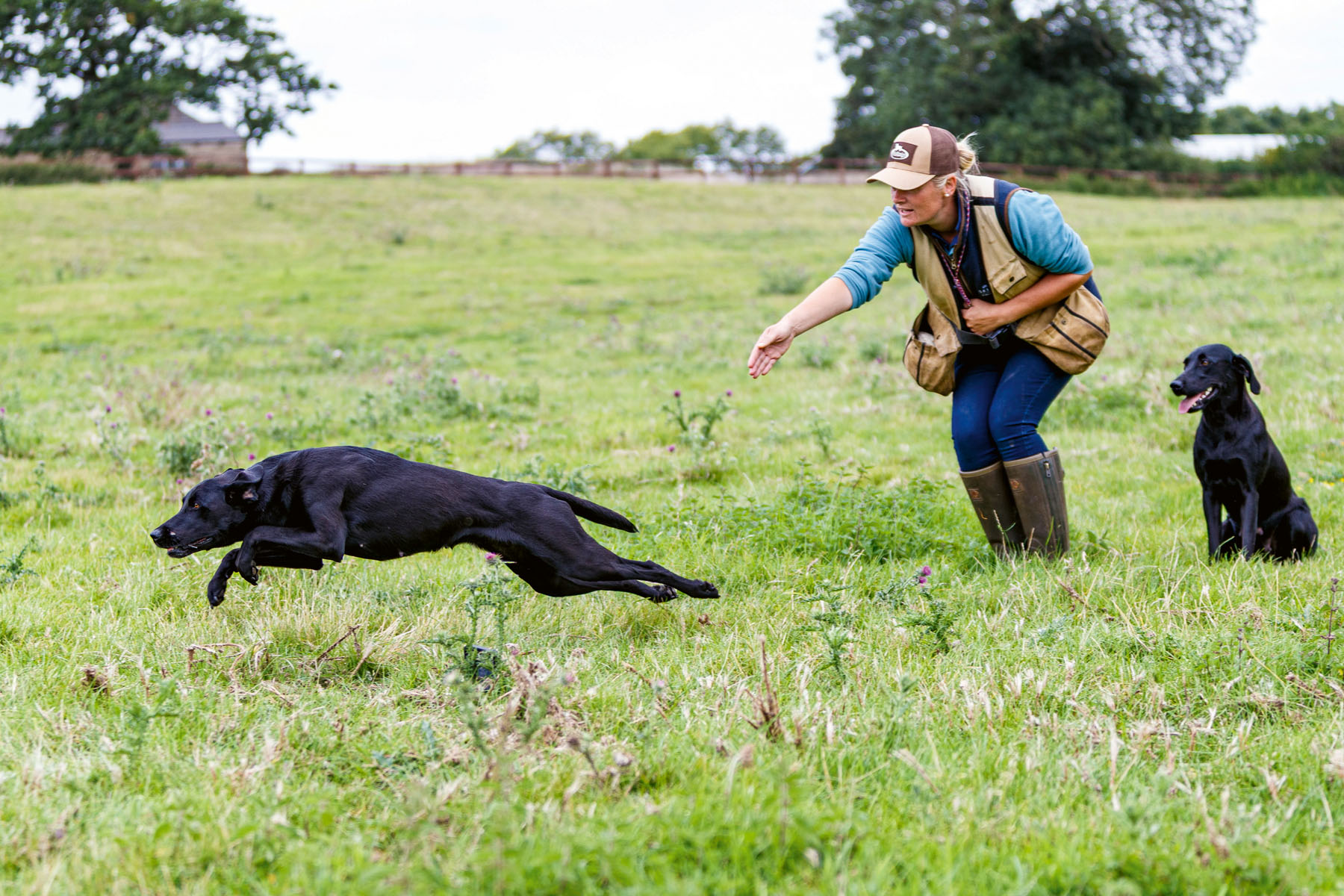

Photography: George Hodgson
When Ellena’s phone rang in January 2024 she had just returned home from major surgery. Hearing that she’d won Gundog Trainer of the Year at the Great British Shooting Show Awards for the second time was, she admits, “a nice pick-me-up” after an extraordinarily difficult year. It also felt like validation for something far deeper than competitive success – recognition of a life devoted to understanding dogs, nurturing their natural abilities, and helping others do the same.
“It meant a lot more than it probably would have normally,” Ellena reflects. “It’s not an easy job. You’re outside all the time. We work 365 days a year. It’s just really lovely to have that recognition.” As voting opens again for the 2026 awards, we spoke to Ellena about why these accolades matter – not just for individuals, but for the shooting community more widely.
Ellena Swift gundog trainer journey and career success
Surprisingly, Ellena’s journey to becoming one of Britain’s most respected gundog trainers began not with a Labrador or a spaniel, but with a German shepherd puppy at the age of 15. Her father, Robert Swift, had always worked Labradors on their farm, breeding dogs with excellent working ability. When young Ellena asked if she could train the family’s new German shepherd “like the Labradors,” he agreed.
The results were remarkable. The German shepherd became a fully competent working dog – picking up, sitting on peg, beating, doing everything expected of a traditional gundog. “I sort of fell in love with it,” Ellena remembers. “That was when the spark ignited.”
After university she bought another German shepherd and continued working both dogs on shoots. Turning up with two German shepherds invariably raised eyebrows, but the dogs performed consistently. At game fair working tests they placed in the top three for three consecutive years, their speed and ground coverage giving them an edge in timed events.
Yet despite their success, formal awards remained out of reach. “They’d say, ‘Oh no, she’s not a gundog,’” Ellena recalls. Her father questioned this – pointing out the dog had worked 72 days the previous season – but his arguments proved futile. “He recommended, ‘If you want to do this seriously, you’re going to have to choose retrievers, spaniels or HPRs. Decide what you want, get a puppy and start from there.’”
Ellena chose Labradors, buying her first from Janet Webb, whom she describes as “possibly the best female handler in the history of UK gundogs”. Janet, who is now in her seventies, had bred, trained, judged and competed Labradors at the highest level. Importantly for Ellena, she also worked Jack Russells and German shepherds. “When she first saw me working the shepherds she even didn’t bat an eyelid,” Ellena says. “‘Do they do the job?’ Janet asked. ‘Yes,’ I replied. And she said, ‘So what’s the problem?’”
That first Labrador – Pumba, named after the character in The Lion King – proved exceptional. “I wish I could have her as a puppy now, because as a handler 15 years ago I made so many mistakes,” Ellena says with characteristic honesty. “Pumba forgave nearly all of them and covered up because she was so good.”

Gundog training tips for Labradors and working dogs
From Pumba’s three litters came a dynasty. Her daughter Nala became an open field trial award winner and competed at the Irish Retriever Championships. Keepa, from the second litter, also reached the Irish Championships and won an open trial. But it was Briar, from the third litter, who would become a Field Trial Champion – fulfilling Ellena’s dream of breeding, training and handling a champion from her own lines.
“She’s been in the England team three times,” Ellena says proudly. “This is her third year qualifying for the IGL Championships.” As we speak, Ellena is preparing to travel to Scotland to compete against the world’s best 60 dogs at this prestigious event.
What defines Ellena’s line? “They’re always very fast, very athletic,” she explains. “They tend to be quite soft – not hard-headed. Some dogs you can put loads of pressure on; mine don’t take that. They need building up, showing what you want, and then they’ll fly.”
Temperament is crucial. Briar currently sleeps with Ellena’s six-year-old daughter Heidi, who won a junior test with the dog at just three years old. Ellena’s nine-year-old son Austin has also competed successfully, most recently winning a veteran test with eleven-year-old Nala. “Both my children have made a lot of judges cry for the right reasons,” Ellena says. “They just love it.”
Common gundog training mistakes and how to avoid them
But these qualities don’t happen by chance. They require thoughtful nurturing from puppyhood – and this is where Ellena believes many handlers repeat the same mistake. Ask her about the biggest error she sees, and the answer is immediate: “Rushing them. Every time.”
She speaks from experience. With Pumba, her first competitive Labrador, she made the classic mistake. “She was so easy and so good that I got excited and had her doing amazing things as a young dog. But in doing that I took away some of her drive. On game, fine – but with dummies she’d do it, then start to look flat and bored because I’d overcooked her.”
How to build drive and discipline in young gundogs
It’s a lesson she carries with her. Her current six-month-old puppy is “wild” – bouncing off walls at the sight of a ball or dummy – and Ellena wouldn’t change a thing. “I’ve nurtured that and built a bond with her. She doesn’t sit. She doesn’t heel. But she doesn’t leave me either.” The puppy attends competitions and shoot days, staying calm in the car and returning to Ellena with total focus despite noise and distraction. “I’ve made her world me.”
Formal training will come later. “Right now, she’s a baby. She needs to learn the fun and the joy in what I eventually want her to do.”
The consequences of rushing are predictable. Dogs pushed too far too soon either lose their desire to work or rebel – often by whining, a “classic sign they’ve been pushed too far too soon”. As Ellena puts it: “It takes minutes to ruin a dog and years to make one.”

Gundog training advice for pet owners and working homes
Beyond the working world, Ellena highlights another common mistake among pet owners: failing to teach dogs to switch off. “We’re constantly contacted about dogs with separation anxiety. Ninety percent of the time it isn’t that – it’s demand barking.”
Dogs learn that noise gets them something – being let out, fed or given attention. “When they come to us, we say, ‘No – you go in your kennel until it’s your turn.’ It’s a baptism of fire. But you can see the dog has never been taught to switch off.”
The remedy is to build downtime into daily life. “Teaching them to do nothing is a million times harder than teaching them to do something,” she says. Her own dogs learn through consistent boundaries – waiting in age order to exit the vehicle, eating only when called by name, settling calmly between activities.
She’s equally forthright about walking. “People get hung up on walks. No. That’s when they get into trouble. They have nothing to think about, so they go and find something.” Instead, she advocates purposeful sessions: “Take them somewhere and train them. Do heelwork for 10 minutes, finding games for 15, then five minutes on a long line just being a dog.”
Despite the demands of training client dogs, writing for Shooting Times, lecturing on animal behaviour, raising two children and competing at the highest level, Ellena sees the awards not as a distraction but as important recognition for an often-overlooked industry.
“It’s a hard slog. It’s not an easy job,” she says. When she wasn’t able to attend the 2024 awards through having to recover from her surgery, her father Robert and husband Tyson stepped in to collect the trophy on her behalf. “It was lovely for them. They are both really into their dogs and shooting, and they have gamekeepered and farmed forever.”
The importance of reputation in gundog training circles
Ellena is typically modest about her wins (she first won in 2022), unsure even how the nomination process works and quick to praise her fellow trainers. Looking at the 2026 shortlist – David Latham, Ben Randall, Ryan Kay and Ian Openshaw – she knows them all personally. “I’d be thrilled for any of them to win. If I rang David or Ben today and asked for help, they’d give it. The gundog world is small, and it’s even smaller if you’re not kind.”
She acknowledges that social media presence may influence voting, potentially disadvantaging older trainers without online platforms. But her own following remains deliberately small and authentic. “I’d rather keep it small. I rarely get negativity because the people who follow me actually work their dogs.”

Life as a professional gundog trainer in the UK
For Ellena, the awards celebrate excellence across the shooting sports. “There are so many good trainers who’ve been doing it forever. Not all have exposure, but that doesn’t make them less skilled. These awards help highlight the hard work and dedication in our industry.”
As she prepares for the IGL Championships – “the best 60 dogs in the world” – Ellena remains true to the principles her father taught her with that first German shepherd nearly 20 years ago. Whether Briar adds another accolade or not, the line will continue, the standards will remain high, and somewhere in Warwickshire a wild six-month-old puppy will be bouncing off the walls, her drive carefully nurtured and her future bright.
Related Articles
People
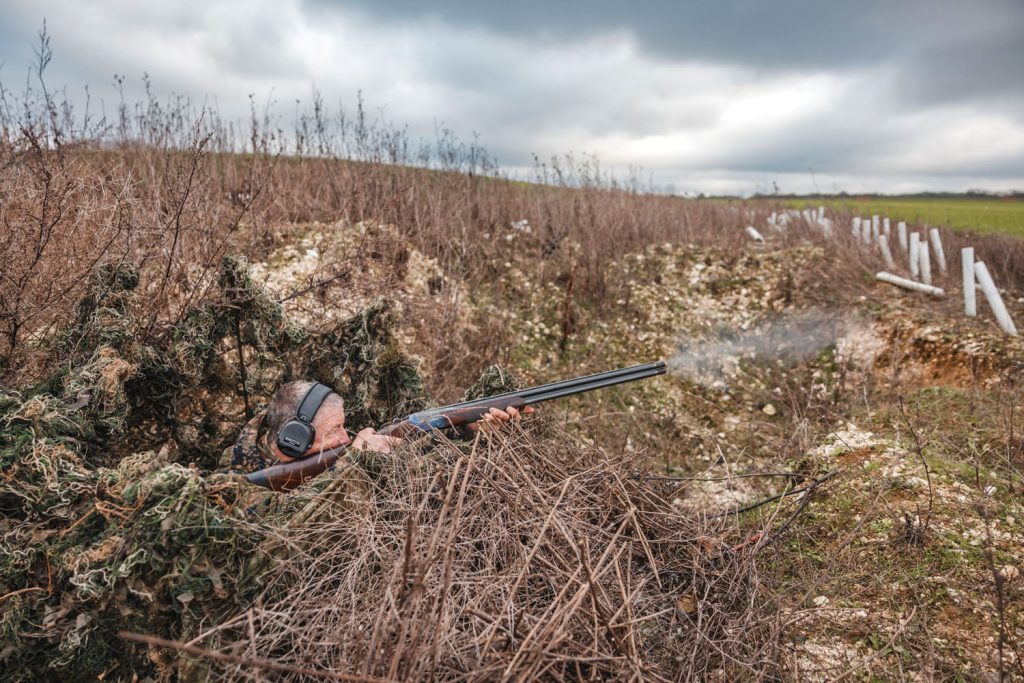
Exclusive interview with March issue’s guest editor, Andy Crow
Andy Crow, renowned pigeon and crow shooter from Kent, shares decades of pest control expertise, fieldcraft, and knowledge passed down from his grandfather.
By Sporting Gun
People
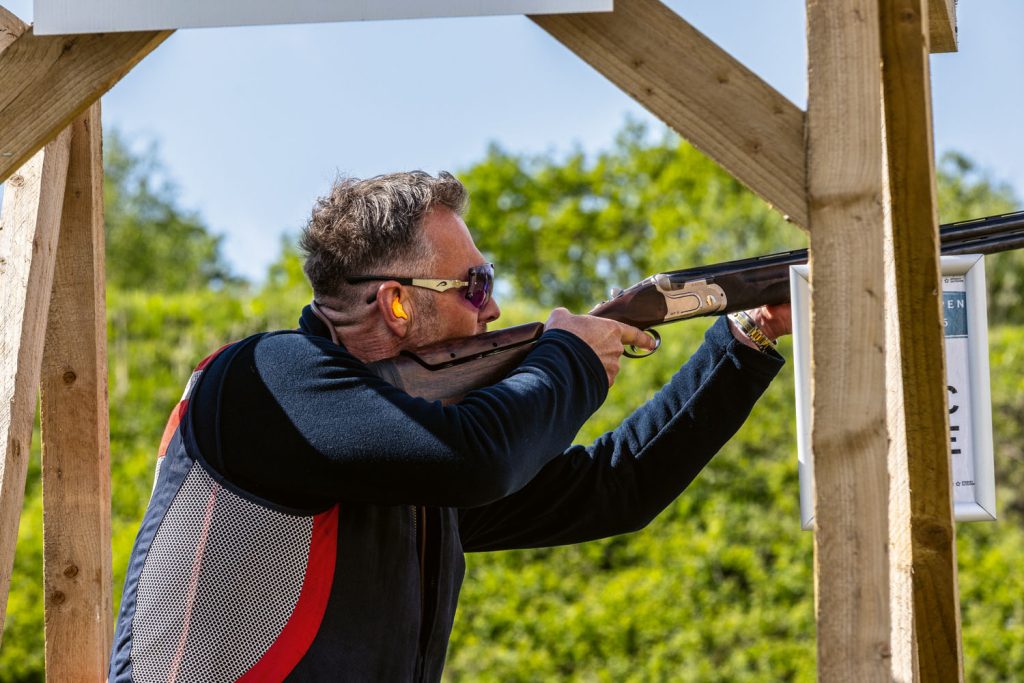
Exclusive interview with February issue’s guest editor, John Lee
From keepering in the Vale of Belvoir to standing on the World Sporting podium, John Lee has built a life entirely around shooting. He talks to us about gamekeeping, pigeons, nerves, fast cars and why...
By Sporting Gun
Get the latest news delivered direct to your door
Subscribe to Sporting Gun
Sporting Gun has been the trusted voice of the shooting community since 1978, and a subscription is the best way to make sure you never miss a word of it.
For just £3.75 an issue – 46% less than the newsstand price – you’ll receive Britain’s leading shooting magazine delivered to your door before it hits the shelves. Every issue is packed with expert gundog training advice, in-depth shotgun and cartridge reviews, technique features from professional shots, pigeon and wildfowling coverage and the people and stories that define the sport.
In a world of endless scrolling, a magazine is something different – a moment to slow down, read properly and absorb knowledge that makes you a better shot. Back issues become a reference library worth keeping.