★ Win a Schöffel Country shooting coat for everyone in your syndicate worth up to £6,000! Enter here ★


Mini driven days at Abercairny: small bags, big memories
Mini driven shoot days offer affordable, mixed-species sport in stunning settings — and Abercairny in Perthshire is one of the finest examples. Matt Kidd reports
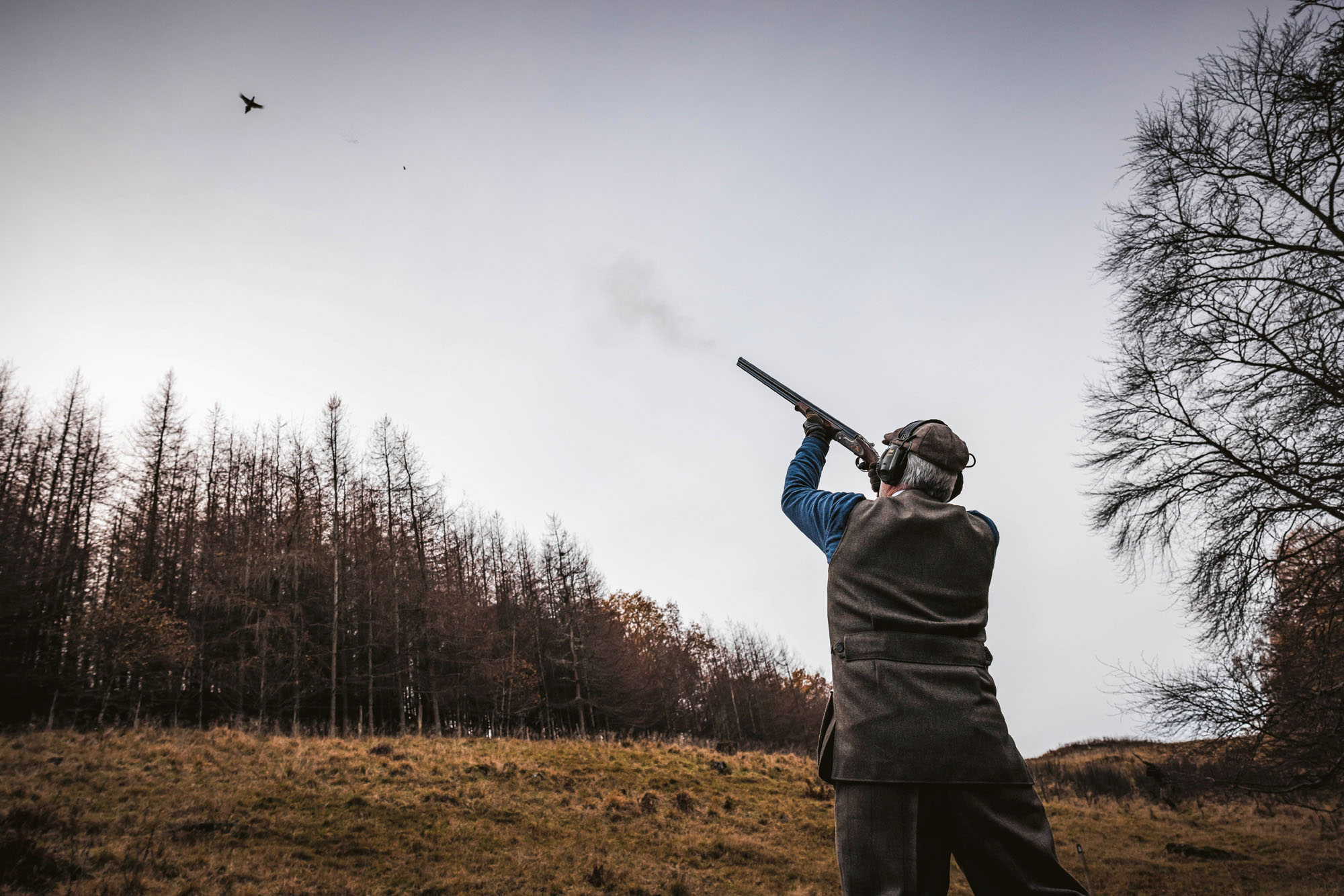

Mini driven days at Abercairny in Perthshire are measured not in numbers, but in the company, opportunities to work one’s dogs, breathtaking views and multiple species. For anyone looking for affordable pheasant shooting, small woodcock days or characterful small driven shoots in Scotland, this is exactly the sort of place that shows how rich a “mini” day can be.
Making the most of what should have been a six-hour drive to Perthshire, I had planned to arrive at the Abercairny Estate while it was still light, hoping to join the French team of Guns for the final shots of their first of two back-to-back days. However, the A9 had other plans. By the time I arrived, darkness had long settled and I only just managed to catch keeper Josh Burton as he placed the last brace of plump ducks on the larder rungs.
In the dim yellow glow I was struck by the variety hanging before me: a brace of brown hare, two-and-a-half brace of woodcock, three brace of mallard, half a brace of teal, rabbit, and snipe, all interspersed among a good head of pheasant and redlegs. It was a modest bag, but one of remarkable diversity – a perfect example of what these mixed mini driven days can offer.
With the Guns packed up and on their way to supper at the estate’s plush self-catered, 10-bedroom Arnbank holiday home, I joined the Parker family for a hearty game stew and a chance to learn more about this remarkable estate. Daniel, the estate manager, and his wife Anna – the 23rd laird of Abercairny – are a characterful couple, with stories of the estate dating back to 1299 when the Moray family first called it home.
A cinematic Scottish sporting landscape
Of notable interest is the estate’s appeal to film and television. Many will have seen its rugged beauty on screen, used by celebrity chefs such as Gary Rhodes, Nick Nairn and Thomas Straker, who all took to the heather-clad hills to showcase the estate’s exceptional game through cooking. The estate has played a key location for hit TV series Outlander, classic film Chariots of Fire in 1981, and the BBC’s BAFTA-winning eco-thriller Edge of Darkness in 1985.
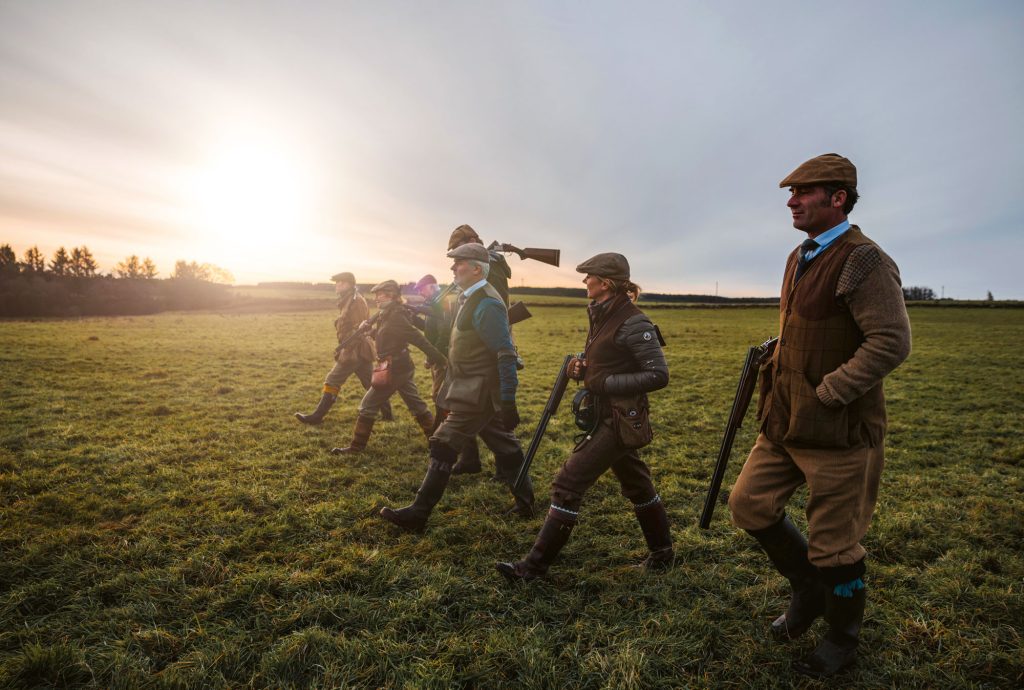
Between stew and dessert, Daniel explained his thoughts as to why: “We are relatively close to film studios in Glasgow and Edinburgh, but more importantly we are the first real taste of the Highlands as you head north. Our 13,000-acre estate offers immense variety, from well-managed heather moorland and ancient woodland to forestry, bogs, open pasture and farmland. We even have a lovely stretch of the River Almond, a spate river that fares well in late autumn.”
Rich habitats, rich sport
This rich and varied landscape is what makes Abercairny a sporting gem. “Our shooting spans everything from walked-up and mini driven to full driven days. We’ve hosted several Macnabs over the years and now run simulated game days in the off-season,” Daniel added. “We wouldn’t be able to do that without the abundance of habitats. We are very lucky.”
Historically the estate focused on driven grouse, though in recent years walked-up days have been more typical and still offer fantastic sport. “We remain committed to preserving this rare mosaic of heather moorland and the biodiversity it supports,” David enthused. “Josh and his underkeeper, Lauchlan MacDonald, work tirelessly on muirburn and predator control to ensure the moor thrives – not just for grouse, but for ground-nesting waders like the curlew. It’s vital that this landscape isn’t lost to misguided legislation and new plantations.”
Retiring to the sitting room, conversation turned to the estate’s broader initiatives. “We’ve always sought to be proactive in supporting the industry, often hosting events for those who may not shoot but are open to learning about it. In April, for example, we hosted the ‘Lekkie Brekkie’ with the Heather Trust, where guests witnessed a black grouse lek before heading back to enjoy breakfast, followed by discussions on conservation.
“We’ve also supported the Game for Giving initiative, working with local butchers and chefs to provide fresh game to local charities. We hosted more than 120 pupils for a day of moorland education sessions as part of the Estates that Educate programme organised by Scotland’s Regional Moorland Groups in partnership with BASC. More recently we’ve introduced spent cartridge recycling too.”
Experiencing a mini driven day at Abercairny
Early the next morning, bright and refreshed, I was eager to experience Abercairny’s renowned mini driven shoot days. Meeting in the bothy for a hearty breakfast – essential, I was told, given the energy to be expended – I sat with Josh as he pulled up Google Maps to outline the plan.
“We’ve got about 9,500 acres to work with today,” he explained, zooming in on the screen. “We’ll start along the riverbank, then move to a second drive here. Depending on what’s shot – I expect a mix of woodcock and pheasants – we can choose from any of our 30 small drives, separate from our eight main pheasant drives, for an array of species.
“Unlike a traditional driven day, where you might see four or five big drives, we have the flexibility to move between bogs, ponds, woodland, hedgerows, pasture and moorland. Everything we do must remain sporting, and bags typically range from 25–60. We’ll see plenty of species that are off-limits, such as black grouse and mountain hare, which is all part of the experience.”
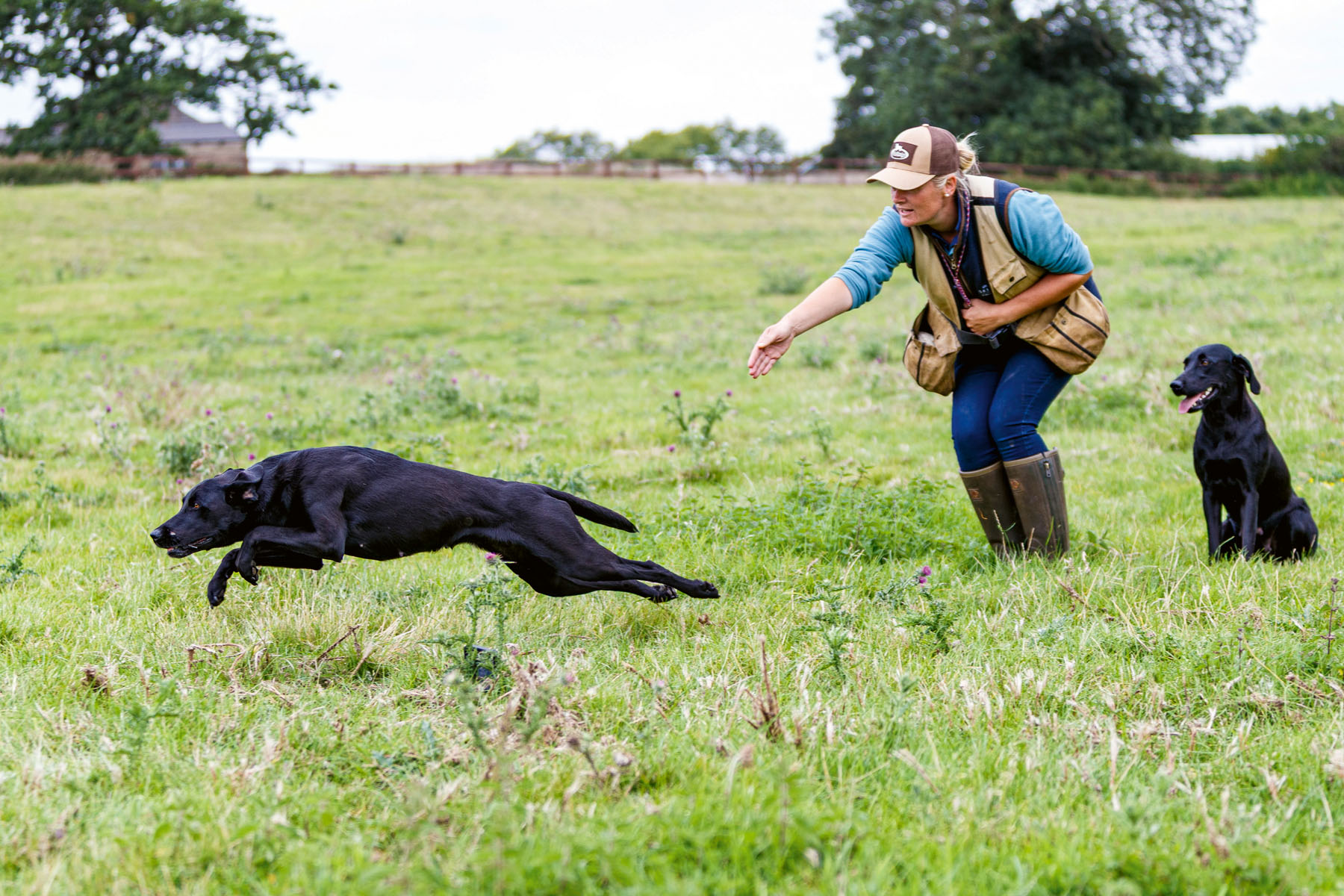
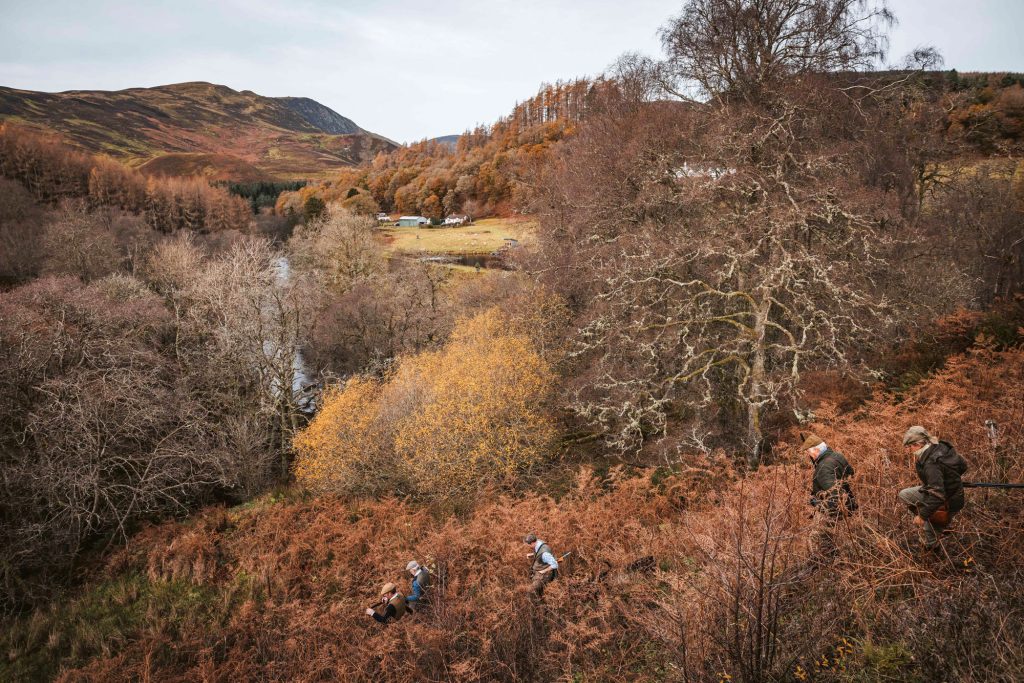
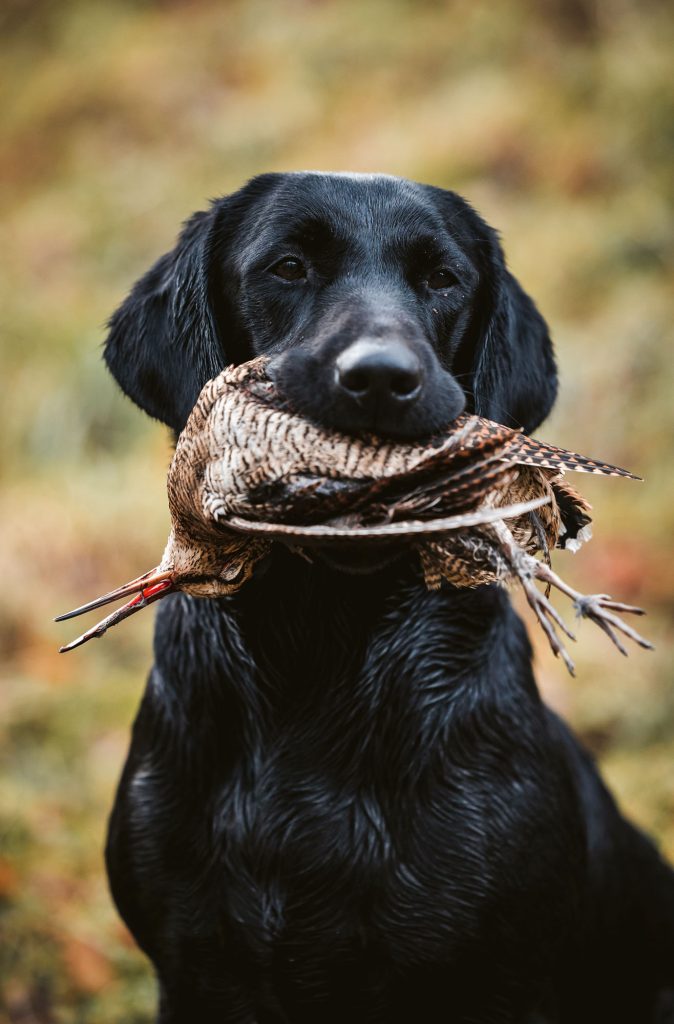
The first drive, at the bottom of the valley, was surrounded by lichen-covered trees. The line consisted of six Guns, with two walking behind to shoot any birds seen breaking back over the beating line. Outnumbered by black labs, spaniels and a lone scruffy German wirehaired pointer, the team took a couple of woodcock with well-placed shots, all using smaller-bore shotguns, including .410s – exactly the sort of relaxed, close-range shooting that makes small woodcock days so addictive.
A few more drives followed, with one beside the River Almond, in full spate, making for some tricky retrieving. Another saw Guns positioned amid bracken-covered fell. After elevenses Josh, keen to mix things up, led us to a new drive featuring a gulley, bog and open pasture. Here partridges were added to the bag, along with a brace of mallard flushed from a small burn.
Lunch beckoned, but the day was far from over. “We never call a day short,” Josh remarked. “We’ll squeeze in a couple more drives, maybe adding a pigeon, another wildfowl species, and a brace or two of snipe.” And so they did. For those used to bigger commercial days, these small driven shoots in Scotland feel wonderfully personal and unhurried, but still very much a full day – not just a morning.
Conservation and low-intensity sport
While the estate plans to enhance its low-ground driven days, with bags of 125 and above, conservation remains at its core. “In addition to our focus on year-round predator control,” Josh noted, “we practise wildlife-sensitive, low-intensity farming.
“Interestingly we don’t have resident woodcock. We see them all winter when lamping foxes, but come March they vanish until November. When they’re here, we devise sanctuary areas and never work the same ground. We never flight them, either, only taking driven birds, which are a challenge. However, we do what we can to improve their preferred habitat and for waders that do breed here, we carefully manage vegetation, create scrapes and make sure to minimise chemical inputs on farmland.”
Inspired by the Duke of Norfolk and Roger Morgan-Grenville’s writings, Josh has also dedicated a decade to restoring grey partridge. “For 10 years I’ve been hatching and releasing greys under bantams. They’ve managed to sustain themselves, which is fantastic. I am hopeful that eventually we will have an established stock of greys throughout the estate.”
From its rich sporting legacy and cinematic landscapes to its commitment to best practice and biodiversity, Abercairny stands as a model of how a traditional estate can evolve while staying true to its roots. The forward-thinking team is working hard to ensure that its landscape, wildlife and sporting traditions – including these wonderfully affordable pheasant shooting opportunities on mini driven days – will continue to be enjoyed for many years to come.
When can you shoot mini driven days?
Mini driven days follow the normal game seasons. In the UK, pheasant can be shot from 1 October to 1 February, with most partridge from 1 September to 1 February, and woodcock from 1 October to 31 January in England and Wales (1 September to 31 January in Scotland).
Most estates offering small driven days will therefore run them from early autumn through to the end of January, with the core of the mini driven season sitting from late October to mid-January when birds are mature, feathered up and sporting.
Can you shoot mini driven days on Sundays?
No – you won’t be shooting mini driven days on Sundays. In England and Wales, it is an offence to kill or take game on Sundays or Christmas Day, including pheasant and partridge. In Scotland, most traditional estates also refrain from Sunday game shooting as a matter of long-standing practice, and wildfowl may not be shot on Sundays.
So while the legal framework varies slightly, as a visiting Gun you should assume mini driven days will run Monday to Saturday only.
How much does a mini driven day cost?
Prices are usually POA (price on application) and vary with bag size, location and what’s included. However, because mini driven days use smaller bags (often 25–60 birds), lighter staffing and simpler hospitality than a big commercial driven day, they are generally much more affordable.
Where a full big-bag driven day might run into four-figure sums per Gun, many mini driven days are deliberately priced to give younger Shots, families or individuals a realistic route into quality driven sport. Estate managers will often say that mini days are the most cost-effective way to experience proper Scottish driven shooting without committing to a huge bag.
Can you only shoot male pheasants on mini driven days?
No. Legally, both cock and hen pheasants may be shot during the open season; there is no requirement to shoot cocks only. However, many shoots – particularly late in the season – choose to run “cocks-only” days to protect breeding hens and keep a healthy stock of birds going into spring.
On mini driven days, the decision is usually down to the estate’s management policy. It’s something that will be clearly explained in the morning briefing.
How many acres do you need for a small shoot?
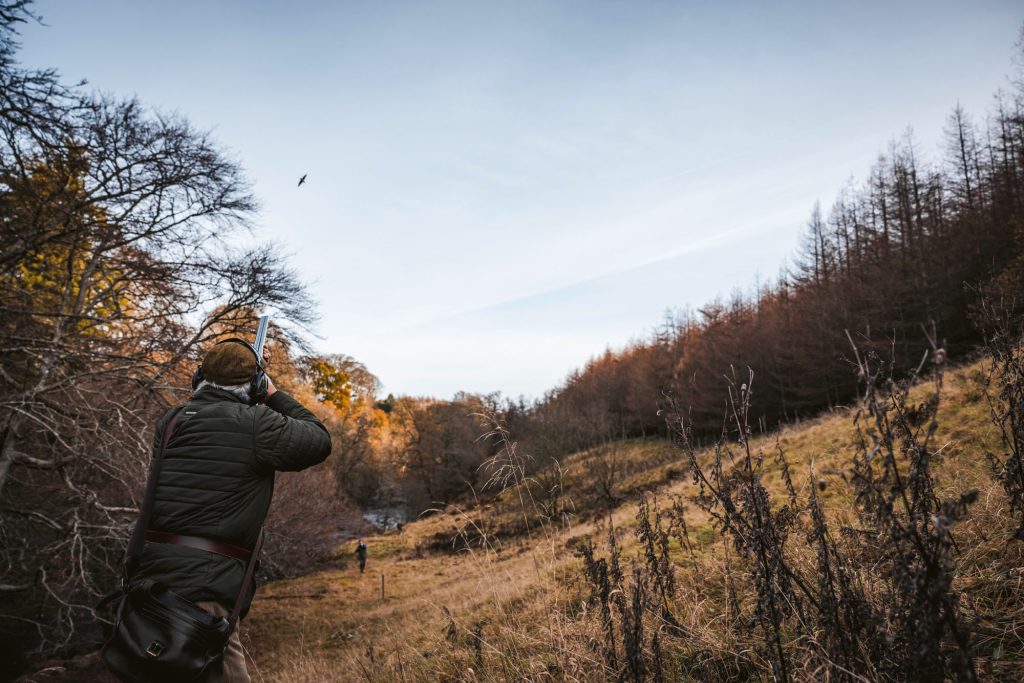
There is no legal minimum acreage for a small shoot, but in practice you need enough ground to present safe, varied drives and to manage habitat and release pens properly. Guidance in the Code of Good Shooting Practice emphasises that release pens and game crops should only occupy a modest proportion of the total woodland and land area, encouraging shoots to work with plenty of space.
At Abercairny, the mini driven days roam across parts of a 13,000-acre estate, though only a fraction of that is used on any given day. For a true small shoot elsewhere, hundreds rather than thousands of acres can be enough, provided the topography gives you safe backdrops, varied cover and the ability to rest drives.
Is shooting kept to the morning only?
Not at Abercairny – and not on most mini driven days. The day described here begins with a hearty breakfast in the bothy, runs through several morning drives, elevenses, further drives before and after lunch, and often a final couple of smaller drives before dusk.
Some estates do offer half-day or morning-only formats as an ultra-affordable option, but the classic mini driven day in Scotland is very much a full day out, just with a smaller, more manageable bag and a more relaxed atmosphere than a big commercial day.
Taken together, all of this makes mini driven shoot days – especially in places like Abercairny – one of the most appealing ways to experience genuine Scottish sporting tradition: wild-feeling ground, mixed quarry, proper dog work and a sense of place, all at a scale and price that many more Guns can enjoy.
Related Articles
Shooting
Thimbleby Shooting Ground: clays, sim game and tuition in Yorkshire
Set against the dramatic backdrop of the North York Moors National Park, Thimbleby Shooting Ground blends challenging clays, simulated game and renowned Yorkshire hospitality. Jasper Fellows explores ...
By Sporting Gun
Shooting
Wildfowling guide: shooting ducks and geese on the foreshore
A complete guide to UK wildfowling: access, equipment, safety and coastal shooting techniques
By Sporting Gun
Get the latest news delivered direct to your door
Subscribe to Sporting Gun
Sporting Gun has been the trusted voice of the shooting community since 1978, and a subscription is the best way to make sure you never miss a word of it.
For just £3.75 an issue – 46% less than the newsstand price – you’ll receive Britain’s leading shooting magazine delivered to your door before it hits the shelves. Every issue is packed with expert gundog training advice, in-depth shotgun and cartridge reviews, technique features from professional shots, pigeon and wildfowling coverage and the people and stories that define the sport.
In a world of endless scrolling, a magazine is something different – a moment to slow down, read properly and absorb knowledge that makes you a better shot. Back issues become a reference library worth keeping.