★ Beat print – get early access to the news by signing up to the Sporting Gun newsletter here ★




What is the significance of lymph nodes in deer?
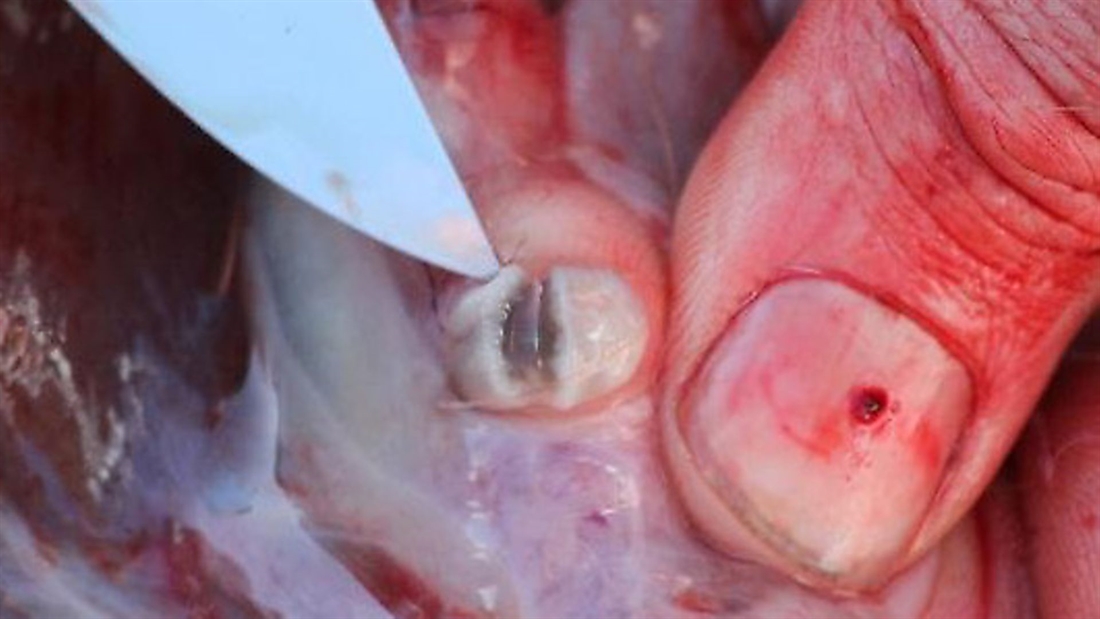

When I was gralloching a deer with a friend the other day he asked me if the lymph nodes appeared normal. I must confess I wasn’t entirely sure what these are and what they tell us about the deer.
JELEN DEER SERVICES replies: Lymph nodes are bean-like structures with the consistency of compressed rubber. The internal colour is typically brownish pink. They are effectively filters, or ‘processing centres’ which play an important role as part of the deer’s natural defence mechanism. They play a vital role in detecting harmful micro-organisms (germs, bacteria and viruses) and destroying them, as well as the production of antibodies.
Enlarged lymph nodes are an indication that the deer has been exposed to some kind of infection, but that it may have effectively controlled the infection. However, this cannot be established without detailed investigation in AHVLA (Animal Health Veterinary Laboratories Agency) laboratories.
In the case of zoonotic diseases (diseases that can affect humans) such as Bovine TB, lymph nodes can be both enlarged and contain pus. This shows that the deer has been subjected to a particularly aggressive infection that its immune system is unable to control.
As far as deer managers and stalkers are concerned, care must be taken to avoid liberating what may be harmful bacteria that can be passed on to humans via lesions in the consumable meat, or contamination on the surface of consumable meat.
As part of your responsibility as a deer manager/stalker it is worth reading up on this aspect of deer health, or taking a course, so that you know what to look out for.
Related Articles
Shooting
Thimbleby Shooting Ground: clays, sim game and tuition in Yorkshire
Set against the dramatic backdrop of the North York Moors National Park, Thimbleby Shooting Ground blends challenging clays, simulated game and renowned Yorkshire hospitality. Jasper Fellows explores ...
By Sporting Gun
Shooting
Wildfowling guide: shooting ducks and geese on the foreshore
A complete guide to UK wildfowling: access, equipment, safety and coastal shooting techniques
By Sporting Gun
Get the latest news delivered direct to your door
Subscribe to Sporting Gun
Sporting Gun has been the trusted voice of the shooting community since 1978, and a subscription is the best way to make sure you never miss a word of it.
For just £3.75 an issue – 46% less than the newsstand price – you’ll receive Britain’s leading shooting magazine delivered to your door before it hits the shelves. Every issue is packed with expert gundog training advice, in-depth shotgun and cartridge reviews, technique features from professional shots, pigeon and wildfowling coverage and the people and stories that define the sport.
In a world of endless scrolling, a magazine is something different – a moment to slow down, read properly and absorb knowledge that makes you a better shot. Back issues become a reference library worth keeping.