★ Win a Schöffel Country shooting coat for everyone in your syndicate worth up to £6,000! Enter here ★




Why your shotgun cartridges are failing to eject
Cartridge ejection failures are highly frustrating, but this common problem might not be caused by your shotgun’s ejectors, but modern cost-saving cartridges themselves, explains gunsmith and shooter Matt Simpson
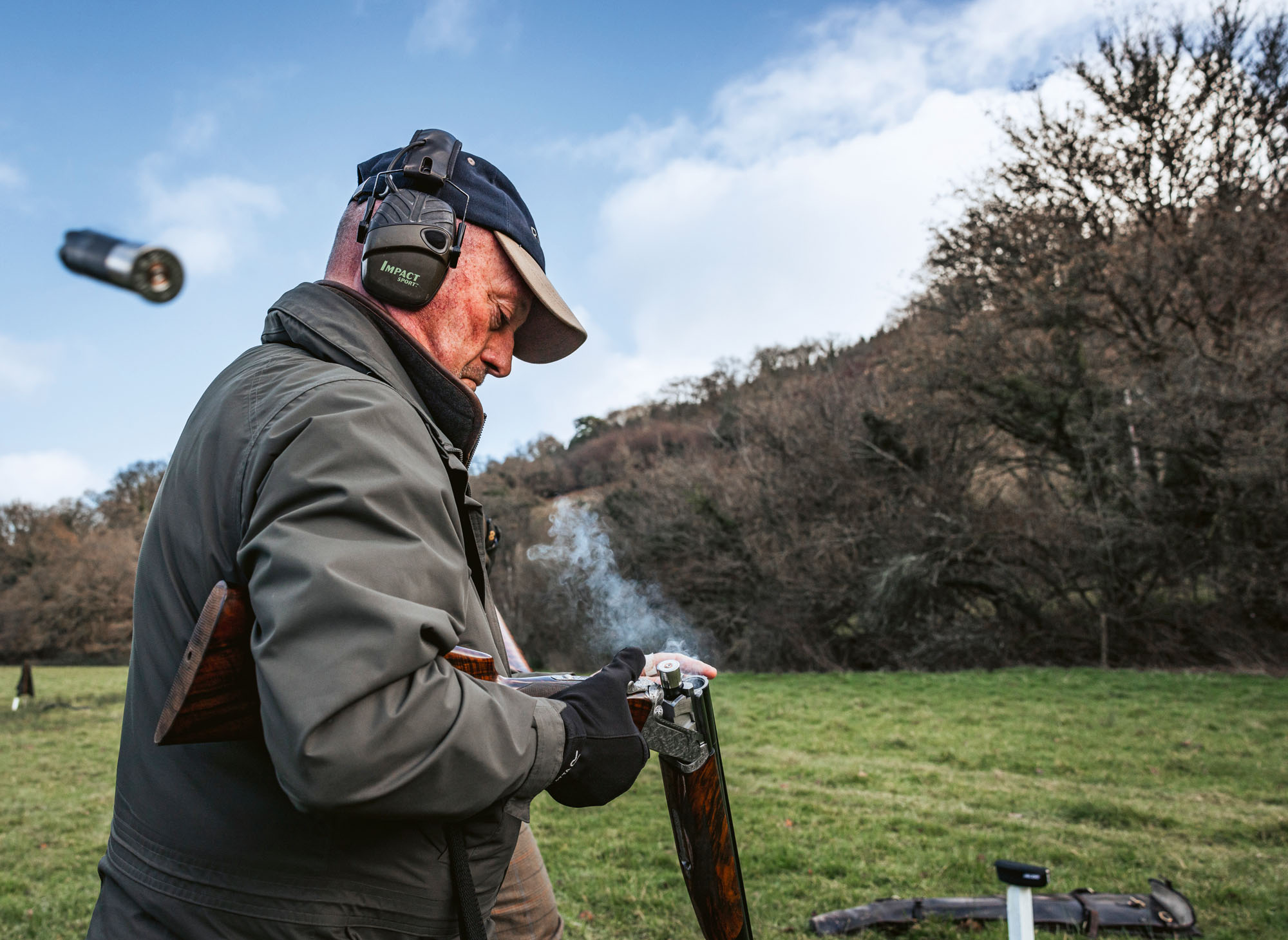

Whether you’re decoying pigeons on the edge of a field, swinging through high pheasants, or breaking clays at your local ground, few things are more irritating than a spent cartridge failing to eject properly. You break the gun, and instead of a crisp ping, you get the dull note of a cartridge lodged halfway out of the chamber. It’s even worse when it is a busy drive, and instead of taking aim at another bird in the flush you’re fumbling around with cold fingers or gloved hands getting the spent case out and a new cartridge in.
The natural reaction is to blame the gun: maybe the ejectors are worn, the springs are tired or the chamber needs cleaning? You make sure to give the chambers a working over with a brush between drives and the problem still persists. Maybe the last gunsmith didn’t service the gun properly?
But what if the gun isn’t at fault at all?
Why shotgun cartridge ejection failures are becoming more common
Over years of gunsmithing and shooting I have noticed this increasingly frustrating problem – not just in guns coming into my workshop but during my own outings in the field. For example, on one driven day alone over 70 out of my 120 shot cartridges failed to eject cleanly. My gun was an almost new, well-maintained over-and-under. Despite clean chambers, sharp ejectors, new springs and spot-on timing, the cartridges would routinely stick.
Fed up, I tried a different batch of cartridges halfway through the day. As if by magic not a single one stuck for the remainder of the shoot. Evidence therefore pointed to the ammunition as the primary cause of these frustrating ejection failures – specifically, the physical structure of the cartridge case.

The real cause of cartridge ejection problems
Upon measuring the fired cases, the difference became glaringly obvious: the cases that ejected cleanly had a plastic wall thickness of around 1.2mm, while the problematic ones were only about 0.6mm thick. That’s half the material. Some research told me that in the 1980s and 1990s the typical wall thickness was 1.1-1.4mm. In the 2000s it was 0.9-1.1mm, in the 2010s 0.6-0.9mm, and more recently as low as 0.5mm on ultralight loads.
How cartridge case expansion affects shotgun chambers
When a shotgun fires, hot gases expand the plastic cartridge case outwards, pressing it firmly against the chamber wall. This is normal. All firearms sold legally in the UK must pass proof at one of the UK’s two official proof houses – Birmingham or London. These tests ensure that the shotgun or firearm can withstand pressures considerably higher than those generated by standard ammunition. Upon passing these tests the gun is stamped with the relative information, dimensions and when the test took place. A gunsmith can then monitor the wear on the barrels and chamber to make sure it’s within the tolerances set out when it was tested.
However, these thinner plastic hulls deform more under pressure and take longer to shrink back after firing. If the case is too thin or too soft it can stick to the chamber wall due to expansion; lose rigidity, making ejection harder; and in some cases the bond between the cartridge and chamber is so strong that the extractor simply slips past the cartridge. Even a perfectly maintained gun will struggle to eject if the cartridge material fails to behave as expected.
Modern cartridge manufacturing and cost-cutting issues
Over time I’ve seen more and more modern cartridges built with lighter, thinner materials. It’s not hard to see why – thinner plastic reduces cost, weight and shipping expenses. Indeed, in almost every industry there is an effort to reduce plastic use, so it would make sense to do the same in ammunition. But this is at the detriment of performance, especially in ejection reliability.
It’s common for customers to bring guns to the workshop that “won’t eject properly”, assuming it’s a mechanical issue. All gunsmiths have a duty to inspect the gun and its mechanical parts, and when there is nothing glaringly obvious, no amount of polishing or tweaking will fix a cartridge that expands like a balloon under pressure. On several very common makes and models I have tried numerous tweaks and alterations in a process of elimination. Some of them may help a bit, but rarely fix the issue. That’s when frustration sets in on both sides of the counter.
Why shotgun chamber modification is not the answer
In the past, I know some gunsmiths tried to solve this problem by opening up the chamber diameter, hoping to reduce the contact points where cases were sticking and giving the spent case more room to eject without bonding. But this can be a hazardous road to take because of the CIP proofing limit. The proof houses allow only 0.010in of tolerance between the maximum and minimum allowable chamber size. Open the chamber just a little too much and the gun will be out of proof, making it legally unfit for use or resale. This is not just poor practice; it’s potentially illegal under UK firearms regulations.
Why UK shooters are seeing more ejection problems
There are several factors that make this a particularly relevant issue for UK shooters:
Older guns still in circulation
Many game shooters still use older English guns with 65mm (2½in) chambers. Firing a 70mm cartridge in such a gun is unsafe, but even when the chamber is correctly matched, thinner-walled cartridges expand unpredictably.
Steel shot transition
As the UK moves away from lead shot in many disciplines, more shooters are using steel loads with slightly different case construction and pressure characteristics. They may also exhibit different expansion properties when fired, particularly if the case wall is too thin to handle the pressure spike.
Rough or high-volume shooting
From pigeon decoying in August to driven days in January, high-volume shooting heats up the chamber, making it more likely that thinner plastic will soften and stick. When you’re firing 100+ cartridges in a session, these small differences become very apparent.
How a gunsmith diagnoses shotgun ejection problems
If a gun comes into the workshop because of an ejection problem, the following is the method I use after fully inspecting that the gun is in proof, on face and play in the extractors is not excessive:
Chamber check: Ensure the chamber is clean, in spec and the right length of cartridges is being used.
Ejector timing: Confirm that the ejectors are tripping at the correct point in the opening cycle.
Spring tension: Measure or test the spring strength to confirm adequate ejection force.
Case wall thickness: If all else looks perfect, it’s time to check the ammunition. Measure the plastic wall of a spent case. Anything below 0.8mm may be suspect.
Ammunition test: Try out a few different cartridge types and see how the gun behaves with each. Often the problem vanishes with different shells. It’s also not uncommon for one gun to eject a cartridge reliably and another gun of the same make and model not to do so. I have also that found some makes and models of guns tend to prefer certain cartridges.
Practical solutions for cartridge ejection issues
Following this I would suggest a few additional methods to find a solution. Some are more costly than others.
Try multiple cartridges
Don’t just rely on the cheapest or most available shell. Try a few different loads and manufacturers. You’ll likely find one that performs more reliably in your gun. Given the considerable cost of this test you could combine it with a pattern test to make the best use of the cartridges being tested.
Avoid ‘ultra-light’ loads
These often use thinner materials to save cost. They’re fine in some guns but prone to ejection problems in others – especially in warmer barrels or tighter chambers.
Let the gun cool
If you’re shooting in large volume (such as on simulated clay day), allow your gun to cool occasionally. A hot chamber can soften cases and increase the chance of sticking.
Clean thoroughly
Residue buildup inside the chamber creates friction. Make sure you use a bronze brush and solvent regularly, not just a pull-through.
Consult a professional
If you’re still unsure, a competent gunsmith can inspect your gun and advise you on the course of action to help resolve the problem.
Final thoughts on cartridge ejection and shotgun reliability
In an age where material cost is everything, cartridge manufacturers have to walk a fine line between efficiency and reliability. Unfortunately that can sometimes result in ammunition that performs somewhat below the standard your gun was built for.
Ejector weakness, timing, play and so on can all contribute to poor ejection, but before blaming the gun, the design or the gunsmith who last worked on it, take a look at the ammunition. A bit of time spent out of season trialling a selection of shells could pay dividends in the season to come.
Related Articles
Clay shotgun product reviews
Shotguns
Beretta 688 review
A full review of the Beretta 688. Designed for serious clay shooters seeking competition performance, modern design and strong value.
By Lloyd Pattison

Shotguns
How pattern testing your shotgun can transform your shooting
Pattern testing your shotgun is the key to better shooting. Learn how choke choice, cartridges and point of impact affect performance, accuracy and confidence in the field.
By Sporting Gun
Get the latest news delivered direct to your door
Subscribe to Sporting Gun
Sporting Gun has been the trusted voice of the shooting community since 1978, and a subscription is the best way to make sure you never miss a word of it.
For just £3.75 an issue – 46% less than the newsstand price – you’ll receive Britain’s leading shooting magazine delivered to your door before it hits the shelves. Every issue is packed with expert gundog training advice, in-depth shotgun and cartridge reviews, technique features from professional shots, pigeon and wildfowling coverage and the people and stories that define the sport.
In a world of endless scrolling, a magazine is something different – a moment to slow down, read properly and absorb knowledge that makes you a better shot. Back issues become a reference library worth keeping.